“I see that I shall receive in my turn a perfect and splendid feast of reason. And now, Timaeus, you, I suppose, should speak next, after duly calling upon the gods,” says Socrates to his interlocutor, the Pythagorean philosopher Timaeus. The cosmological theories that comprise much of Plato’s Timaeus are an attempt to ground Socrates’ description of the ideal state, as described in the Republic, within a broader, ordered world. The description of the origin of all things that Timaeus embarks on strikes the modern reader as the very opposite of “a feast of reason.” Seven divine planets orbiting the earth, the division of everything into four geometric elements, and a conception of the universe as a human body are just some of the claims that would have surely flunked our astronomer out of any high-school physics or biology class. So what is the significance of the dialogue that Benjamin Jowett, Plato’s greatest English translator and scholar, called “the most obscure and repulsive to the modern reader”?
To answer that question, the Italian scholar, philologist, and poet Piero Boitani has given us Timaeus in Paradise: Metaphors and Beauty from Plato to Dante and Beyond. The title is a preview of the breadth of work. In his preface, Boitani offers a kind of road map for his intellectual project: “My aim was to establish a family tree for the Timaeus, but also to turn it upside down so as to produce a view like the one Dante claims can be gained from the highest Heaven, directing the gaze towards the biblical trunk and leafy boughs of the Beautiful and the Sublime.” The author illuminates how profoundly the Timaeus shaped the thought of writers and theorists from Philo of Alexandria to Werner Heisenberg—with Ovid, Boethius, and Thomas Aquinas all making appearances along the way.
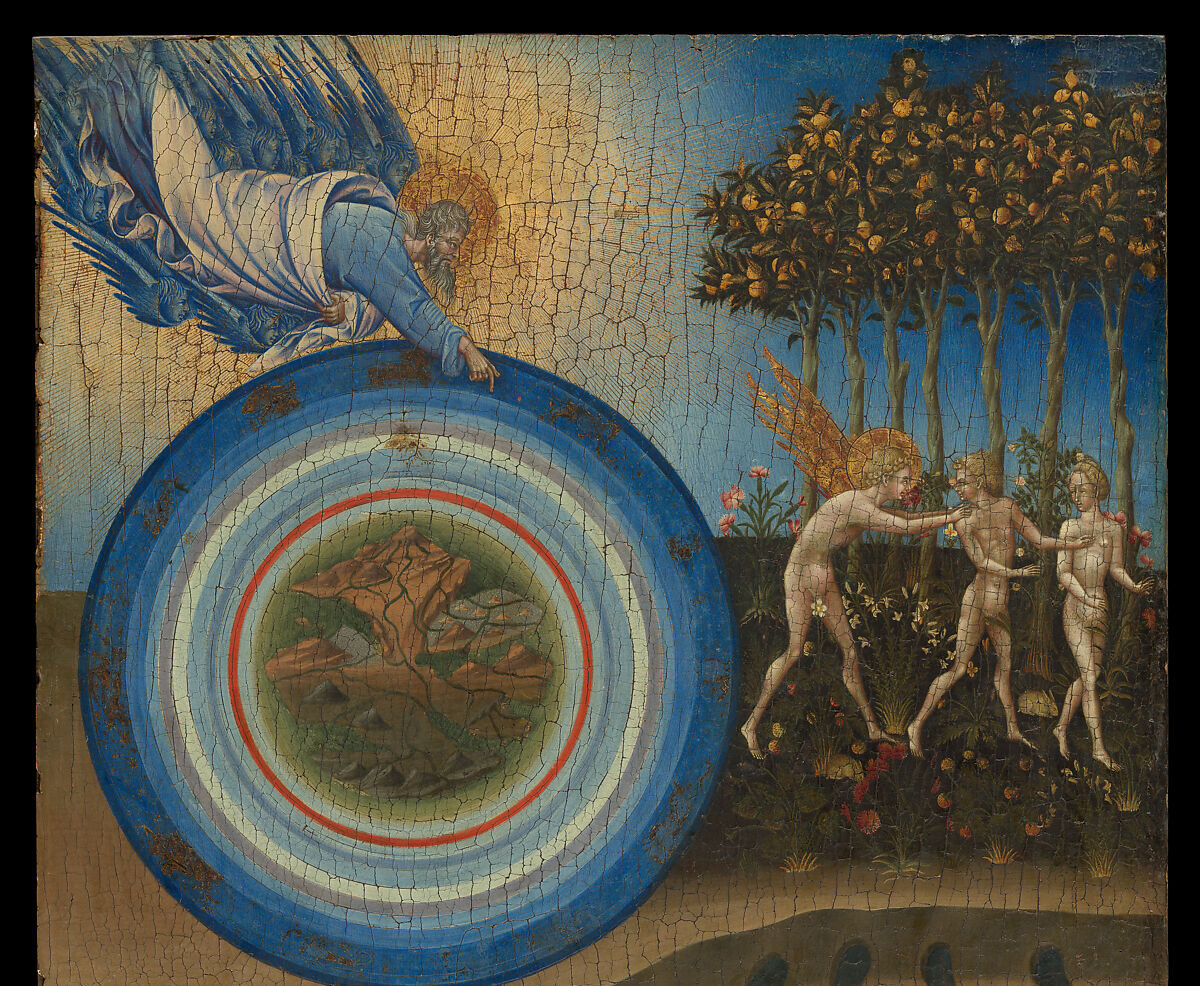
The Latin translation of the dialogue, the only one of Plato’s works known in medieval Western Europe, was primarily read for its “scientific” account of the creation of the universe, which was thought to square with the biblical creation story. Saint Augustine even quoted the Timaeus to prove that Plato was aware of the Book of Genesis and that it influenced his thinking. The authority of the text endured well into the early modern period, with the scientists Johannes Kepler and Galileo quoting and praising the Timaeus in letters to one another.
But the Timaeus was also appreciated for its literary quality, in particular, its use of metaphor. Pseudo-Longinus, in his pioneering treatise on aesthetics On the Sublime (first century A.D.), does not offer much in the way of a commentary on the truth of Plato’s creation story, but he is enamored with its composition. The longest passage of Plato quoted in On the Sublime is an extended metaphor in the Timaeus in which the different organs and workings of the body are compared to features of the outside world, like houses, pastures, and gardens. For Pseudo-Longinus, Plato’s use of metaphor in the dialogue was a masterclass in “the natural power of figurative language.”
Boitani’s discussion of Dante, specifically the Paradiso, takes up the latter half of the book. As a clear indication of the Timaeus’s central place in Dante’s imagination, the semi-divine Beatrice paraphrases the dialogue to explain what happens to souls when they leave the body:
He [Plato] says that souls go back to their own stars,
Believing them to be excised from these,
When Nature granted each its proper form.
The brilliance of the Timaeus, however, does not stop Dante from placing Plato in Limbo (the first circle of Hell) with the rest of the virtuous pagans. Along with Aristotle, Plato represents an “excessive desire for knowledge,” which is sinful in light of man’s fallibility.
Given the difficulty of elucidating the life and afterlife of a text as rich and complex as the Timaeus, one may wonder why Boitani chose to write his book in thirty-seven short chapters, which are more akin to vignettes. This loose and somewhat impressionistic structure is perhaps a nod to Plato’s Socrates, who approaches even the most difficult and tendentious topics with an admirable lightness of touch.