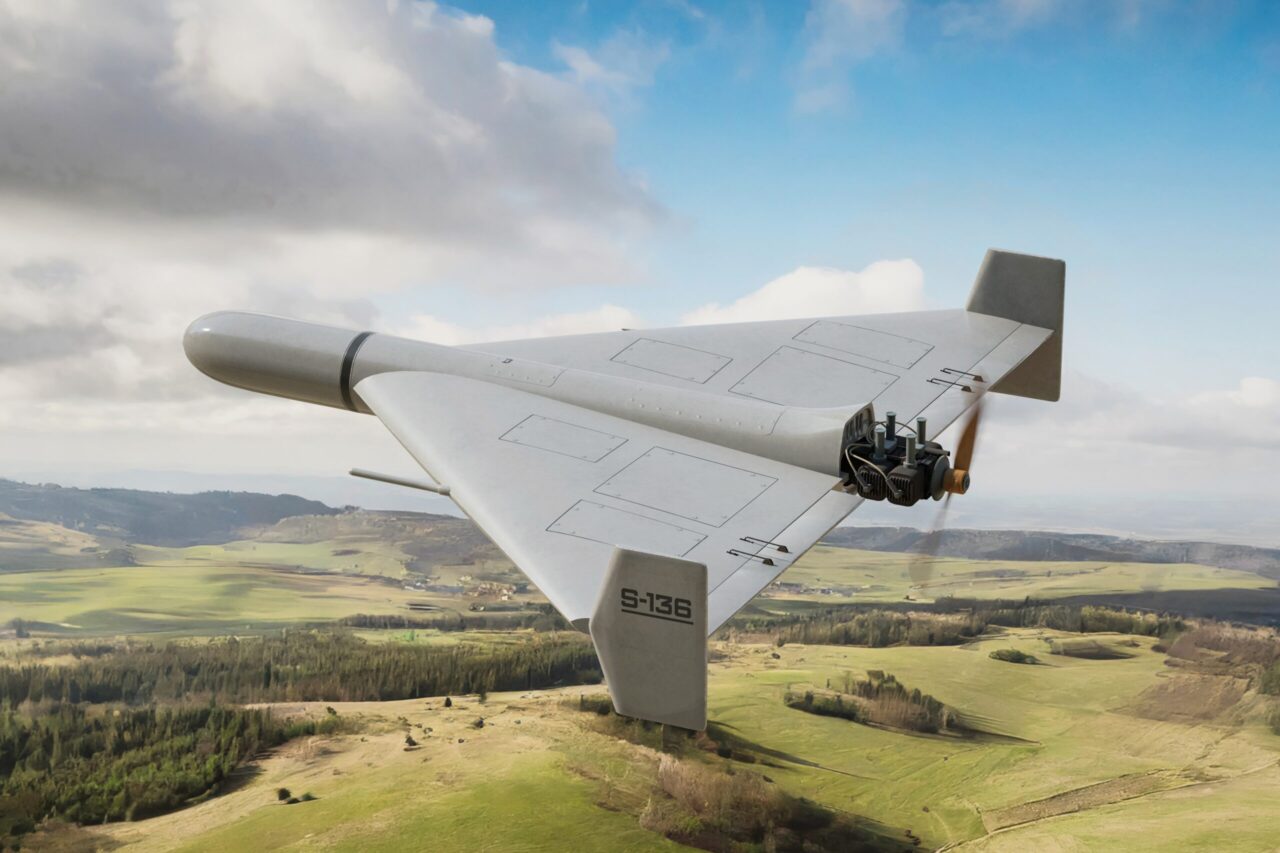
Russia has been relying on Iranian Shahed drones in its attacks on Ukraine with increasing frequency.
The use of drone warfare in the ongoing Russia-Ukraine conflict does not appear to be dwindling. In fact, Moscow recently fielded a brand-new iteration of the Shahed drone series that Russian forces have been using to strike Kyiv over the last three-plus years of conflict. A video this week has circulated on social media, depicting an air-to-air intercept of an R-60 armed Shahed-160 unmanned aerial vehicle (UAV). The War Zone reported on the footage, which was shared by the Sternenko Community Foundation, a Ukrainian nongovernmental organization. According to the foundation’s claims, the Russian-launched Shahed was destroyed by a Sting anti-drone interceptor. As showcased in images of the aftermath of the attack, the missile appears to have been mounted to a launch rail that had been installed on the Shahed’s nose. Despite this instance of the Russian-launched UAV being intercepted, the Shahed drones continue to play a pivotal role in Moscow’s war strategy against Kyiv.
What We Know About the Shahed UAV Platform
- Year Introduced: 2022
- Number Built: Best estime ~6,000 per month
- Length: 3.5 m (11 ft)
- Wingspan: 2.5 m (8.2 feet)
- Weight: 200 kg (440 lb)
- Engines: MD-550 piston engine
- Top Speed: 185 km/h (115 mph)
- Range: 2,500 km (1,600 miles)
- Service Ceiling: 4,500 meters (14,764 ft)
- Loadout: Carries a warhead estimated to weigh between 30–50 kg (66–110 lb)
- Aircrew: 0 (unmanned)
The HESA Shahed-136 is an Iranian-designed loitering munition that has become popular due to its role in the ongoing Russia-Ukraine war. This type of lethal UAV is often referred to as a “suicide” or “kamikaze” weapon due to its ability to loiter around a target area before striking.
While the Shahed 136 is rather simple in design, Russia has been significantly ramping up the use of this UAV series since the war began. According to the Center for Strategic and International Studies, Moscow has increased its deployment of these Iranian drones from roughly 200 launches per week to more than 1,000 per week by early 2025. The Shahed-131 variant has also been used frequently in the Eastern European conflict. As an older version of its sister drone, the Shahed-131 features many of the same capabilities as the 136. The Shahed-131 is smaller, however, and it is powered by a reverse-engineered version of the Beijing Micro pilot UAV Control System Ltd MDR-209 Wankel engine.
How Did Russia First Acquire the Iranian Drone Series?
Back in 2023, the White House released images depicting members of a Russian delegation visiting Iran’s Karshan Airfield to view several different drone types. While the Iranian regime initially denied its UAV assistance to its Russian ally, the ongoing arms deliveries between the two nations have been confirmed. Early on in the war, the US Defense Intelligence Agency noted that Iran was becoming one of Russia’s most critical military backers amidst its Ukraine invasion. Over the last few years, open-source intelligence trackers and analysts have been able to verify that the debris of Iranian-made UAVs like the Shahed have been discovered in the aftermath of attacks in Kyiv.
As the Iranian-Russian defense partnership continues to grow, additional Shahed drone deliveries should be expected.
About the Author: Maya Carlin
Maya Carlin, national security writer with The National Interest, is an analyst with the Center for Security Policy and a former Anna Sobol Levy Fellow at IDC Herzliya in Israel. She has over 1,000 articles published over the last several years on various defense issues. Carlin has bylines in many publications, including The National Interest, Jerusalem Post, and Times of Israel. You can follow her on Twitter: @MayaCarlin.
Image: Shutterstock.