|
Forwarded this email? Sign up for free to have it sent directly to your inbox.
|
|
|
Good morning,
Today, we’re looking at how President Trump is remaking the electorate, new research on school accountability, progressivism in Portland, a proposal for lane changes in Central Park, and the 50th anniversary of James Q. Wilson’s Thinking About Crime.
Write to us at editors@city-journal.org with questions or comments.
|
|
|
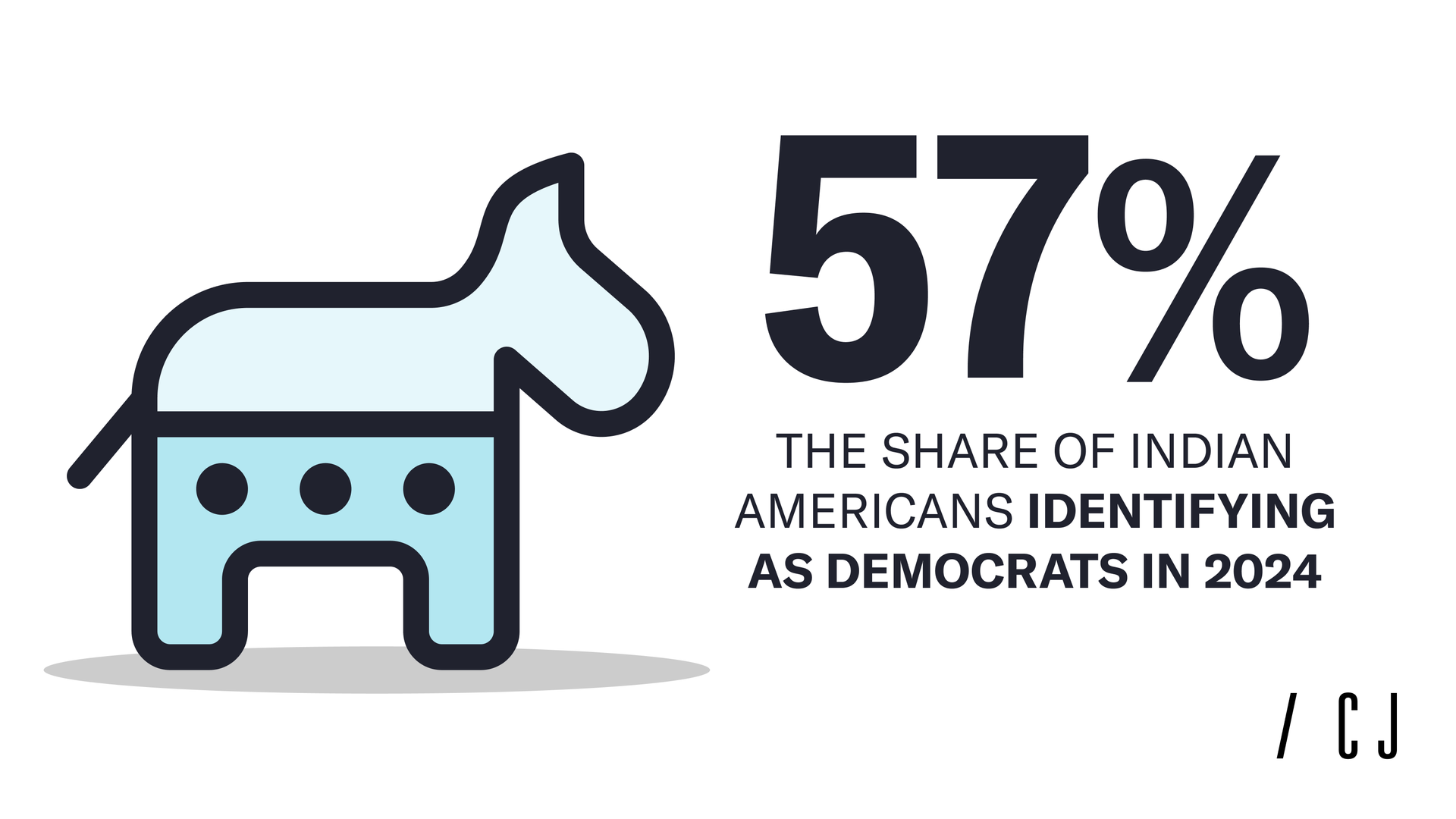
While Democrats are in no danger of losing the overall black vote, they can no longer automatically count on blacks to support their party’s candidates. President Trump’s success is evidence of this. He nearly doubled his support among black voters between 2020 and 2024, even while running against Kamala Harris, a woman of black descent.
Asians and Hispanics are leaving the party, too, with their support for Trump increasing from 30 percent to 40 percent and from 36 percent to 48 percent, respectively, from 2020 to 2024. “Declining minority support for Democrats is a function of the party’s waning support among blue-collar voters, who are disproportionately black and Hispanic,” Jason L. Riley writes. Whether this phenomenon will endure beyond Trump remains to be seen.
Read more about the changing electorate.
|
|
|
A study published last month tracked more than 54,000 students in South Carolina from high school into their thirties, examining incarceration rates. Students at schools with lower ratings were less likely to be arrested than those at schools with less severe ratings. “That’s because the harsher ratings initiated more state oversight,” Neetu Arnold explains. “Schools with poor ratings must submit improvement plans that include strategies to raise academic performance, professional development for teachers, and a timeline for progress.”
Read her take on the research and what it means for other struggling schools.
|
|
|
In Portland, Oregon, the far Left is the establishment. But in October, the New York Times published an article about the city’s “socialist revolution,” portraying socialists as “outsiders” taking on elite power.
“This narrative is fiction,” writes Harrison Kass, who ran for city council last year. “In Portland, the far Left holds the votes, the money, and the bureaucracy. Its campaign coffers overflow with union dollars and out-of-state donations. It coordinates as a caucus, mocks its colleagues in group chats, and moves as a bloc.”
Read more about the city’s ideology, and the consequences of its policies, here.
|
|
|
New York’s Central Park used to be an urban oasis. Today, it is overrun by pedicabs, e-bikes, and delivery vehicles—and it could get worse, thanks to a new proposal.
The Central Park Conservancy, Parks Department, and Department of Transportation want to allow e-bikes inside the park permanently, remove traffic signals that are often ignored, and redesign the park drive into what Yael Bar Tur refers to as “an e-vehicle and delivery-bike superhighway.”
But a study found that nearly 70 percent of Central Park-goers primarily use it to walk or run. “So why are we transforming it for the 4 percent who reported using it for electric mobility?” Bar Tur asks.
Read more about the proposal and the challenges it might pose to pedestrian safety.
|
|
|
In 1975, James Q. Wilson wrote Thinking About Crime, where he challenged the consensus that racism and poverty determined crime. He instead argued that incentives can deter individuals from offending, regardless of what their underlying tendencies may be.
He also saw disorder as playing a central role in a community’s crime level. The breakdown of a shared set of norms, “more than any strain or label,” Charles Fain Lehman writes, “was, Wilson believed, a major driver of rising crime.”
Read Lehman’s reconsideration of this seminal book and its importance 50 years after its original publication.
|
|
|
“I guess Leahy’s fame has receded, like many great coaches of the early and mid-20th century (Pop Warner, anyone?). But when I went to Notre Dame in the 1970s, he was still well remembered and revered. Something about getting four national championships will do that.”
|
|
|
Photo credit: Anadolu / Contributor / Anadolu via Getty Images
|
|
|
A quarterly magazine of urban affairs, published by the Manhattan Institute, edited by Brian C. Anderson.
|
|
|
Copyright © 2025 Manhattan Institute, All rights reserved.
|
|
|
|