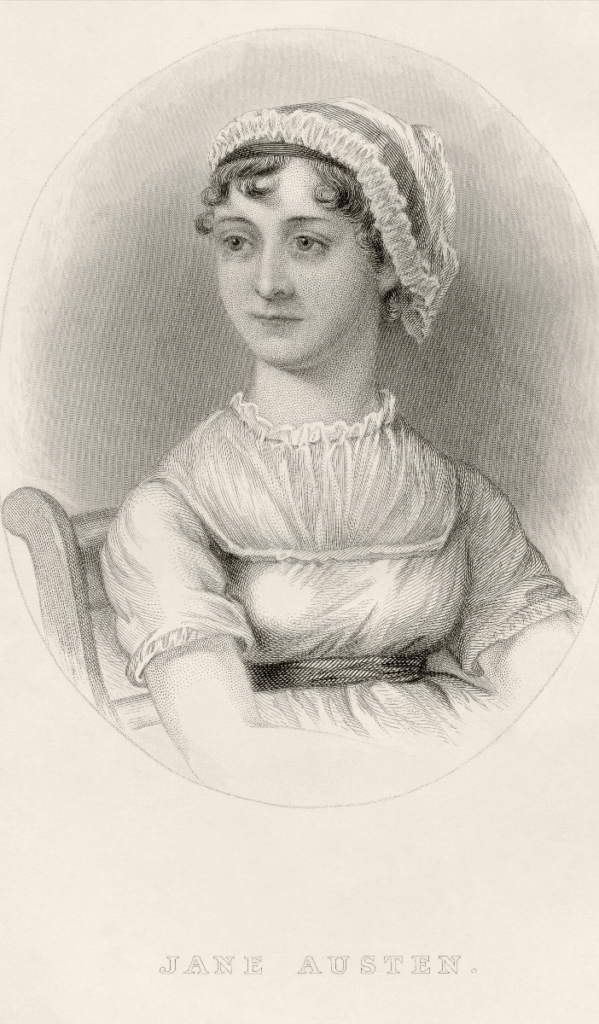
“Paper Jane: 250 Years of Austen,” at the Grolier Club (December 4–February 14, 2026): The U.S. semiquincentennial is not the only one in town. Starting this week, the Grolier Club is celebrating the 250th anniversary of the birth of Jane Austen. When Austen died at the age of forty-one, she was only a relatively obscure anonymous author of four novels. “Paper Jane: 250 Years of Austen” traces the growing popularity of the quintessential English novelist through a “kaleidoscopic mix of 110 objects, including rare first editions, manuscripts, popular reprintings, movie posters, illustrations, theater playbills, and other paper ephemera,” all drawn from the collections of three Grolier Club members. For those who can’t make it to the exhibition, the club is also publishing a catalogue that details how Austen’s novels redefined the reading culture of the English-speaking world. —AG
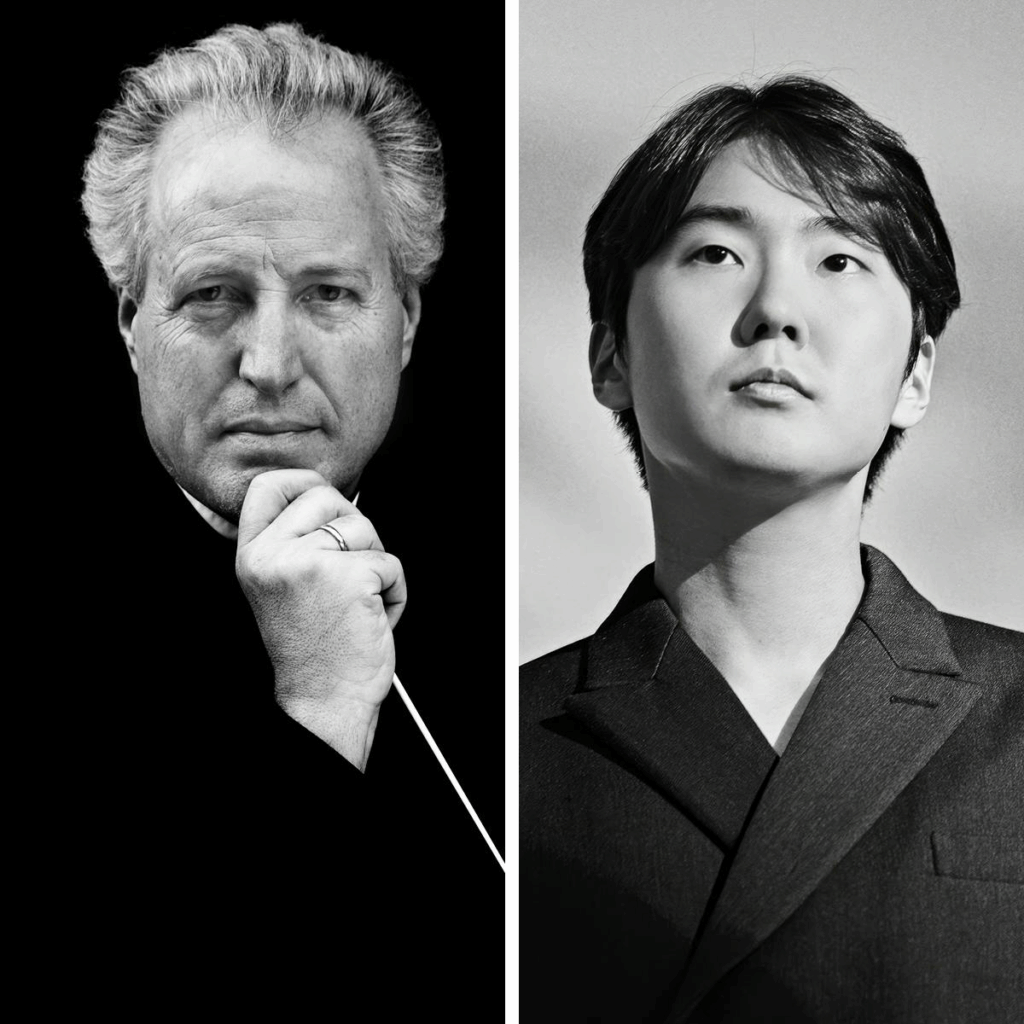
Pittsburgh Symphony Orchestra, at Carnegie Hall (December 3): One wouldn’t normally think to compare Rachmaninoff’s Rhapsody on a Theme of Paganini with Shostakovich’s Symphony No. 5, but consider them as essays from two Russians on either side of the Iron Curtain, as it was soon to be called. Rachmaninoff, the White Russian émigré, wrote his Rhapsody, one of the last Romantic piano masterpieces, in 1934 at his villa in Switzerland. Shostakovich, the sometime panegyrist of the Russian Revolution, wrote his emotionally charged symphony just three years later, as Stalin unleashed the horrors of the Great Purge. Manfred Honeck and the Pittsburgh Symphony perform the two pieces Wednesday night at Carnegie Hall, joined by the pianist Seong-Jin Cho for the Rachmaninoff. Appropriately, Frozen Dreams, by Lera Auerbach, a Soviet defector to the United States, receives its New York premiere. —IS
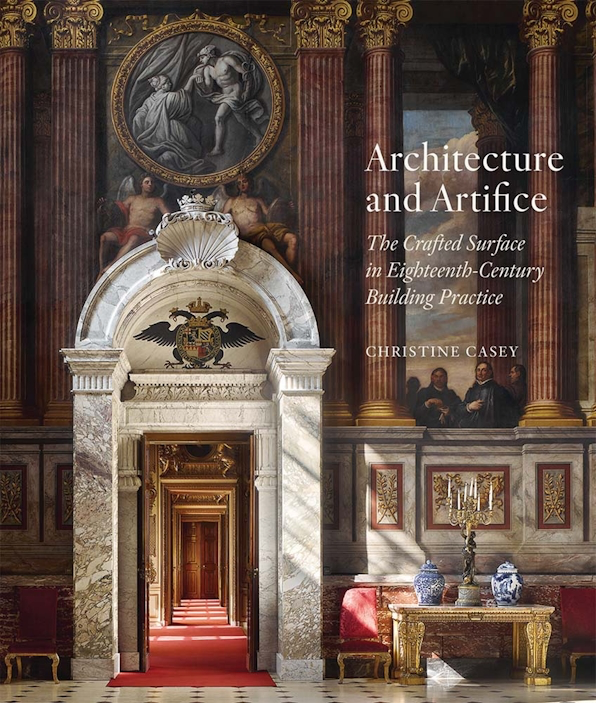
Architecture and Artifice: The Crafted Surface in Eighteenth-Century Building Practice, by Christine Casey (Paul Mellon Centre for Studies in British Art): In our age of glass-and-steel exteriors and white-cube interiors, it can be easy to forget that the history of Western architecture is very much one of surface decoration. As Christine Casey tells it in her new book Architecture and Artifice, surfaces are now overlooked because of “a multiplicity of factors, not least modernism’s idealisation of volume and proportion and its attendant rejection of ornament.” But even in Britain in the stylistically chaste eighteenth century—the focus of Casey’s illustrated study—surface ornament was exceptionally important to the architectural whole, and not just when it came to interiors: consider Hawksmoor’s inventive banded rustication on the frontage of St Mary Woolnoth in the City of London as just one enticing example. Casey’s book brings surfaces back to the fore and draws out forgotten figures of the eighteenth century, including the craftsmen responsible for various ornamental and structural delights. —BR
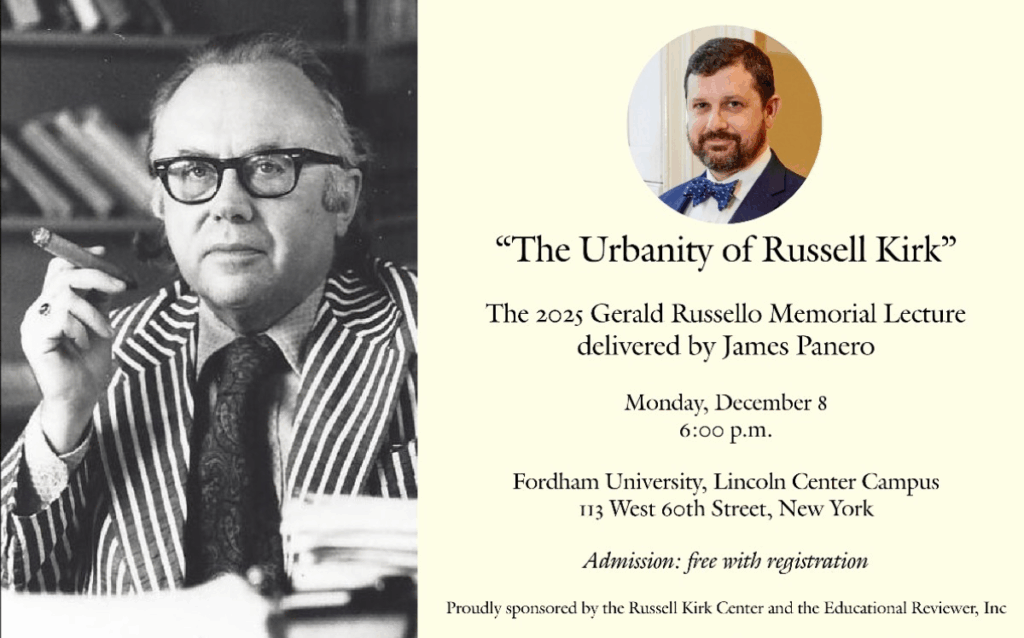
“The Urbanity of Russell Kirk,” featuring James Panero, at the Lincoln Center campus of Fordham University (December 8): Three years ago, the Russell Kirk Center inaugurated the Gerald Russello Memorial Lecture in memory of the late University Bookman editor and New Criterion contributor. Next Monday, December 8, at 6 p.m., I am honored to present the fourth lecture in this annual series at a reception on the Lincoln Center campus of Fordham University. My title is “The Urbanity of Russell Kirk.” What are the “ancestral shadows” of city life? Why do urban planners haunt Kirk’s stories? And is the automobile truly the “mechanical Jacobin,” as Kirk called it, of the American landscape? Come learn about Kirk and the city as we remember our friend Gerald (1971–2021) in this event co-sponsored by the Educational Reviewer. Attendance is free with registration. —JP
Dispatch:
“Parsifal by the wayside,” by Paul du Quenoy. On a new production of Parsifal, at the San Francisco Opera.
Podcast:
“How Political Correctness hijacked the Arts,” featuring Heather Mac Donald & Roger Kimball. On the politicization of contemporary art.
From the Archives:
“Under the aspect of eternity: the fiction of Flannery O’Connor,” by Bruce Bawer (January 1989). On Collected Works, by Flannery O’Connor.