Russian fighters are violating the airspace of Baltic nations with increasing frequency.
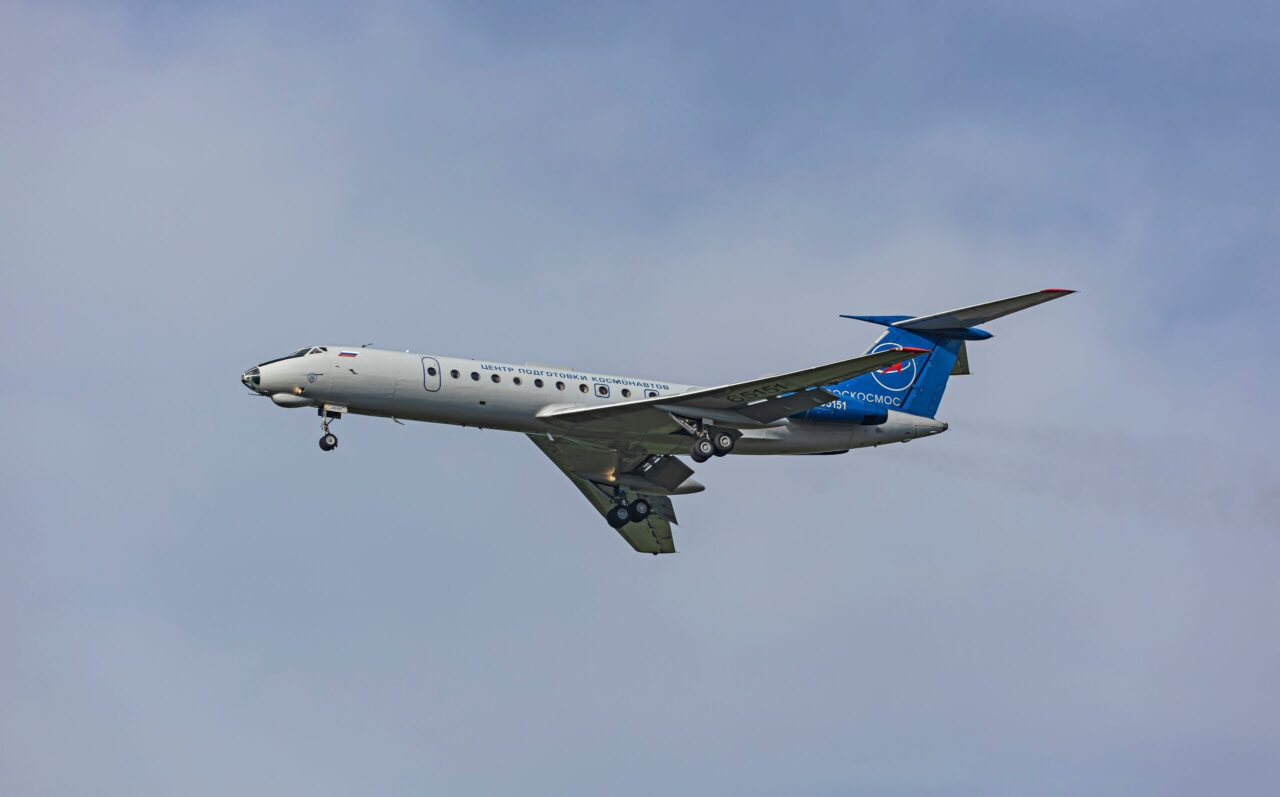
A pair of Italian Eurofighter jets intercepted Russia’s “Black Pearl” aircraft earlier this month. According to a NATO Air Command report, a Tupolev Tu-134UBL was flying alongside a Su-34 tactical bomber and two Sukhoi Su-30SM2s when it was intercepted by the Italian Air Force. The Eurofighters are deployed as part of NATO’s Baltic Air Policing mission and Operation Eastern Sentry in Estonia.
This report of a Russian aircraft interception follows a litany of recent incidents involving Russian jets violating the airspaces of NATO nations, including Poland, Estonia, Lithuania, and Latvia. While US president Donald Trump has been trying to spearhead a ceasefire between Ukraine and Russia amidst the ongoing invasion, an uptick in hostilities carried out by Moscow suggests this may be challenging to mediate.
In October, Polish MiG-29 fighters intercepted a Russian spy plane over the Baltic Sea. The Russian II-20 aircraft was escorted out of the area after Poland’s Operational Command of the Armed Forces reported that the plane was flying with its transponder switched off. A few weeks earlier, NATO intercepted three Russian jets after they violated Estonia’s airspace in a “brazen” intrusion. Ultimately, Italian-piloted F-35 Lightning IIs responded to the violation and escorted the Russian fighters away. At Estonia’s request, NATO met for consultation and condemned Russia’s actions, stating that “NATO and [its] allies will employ, in accordance with international law, all necessary military and non-military tools to defend ourselves and deter all threats from all directions.”
About the Tupolev Tu-134UBL
- Year Introduced: 1967
- Number Built: 854 built in total
- Length: 37.1 m (121 ft 9 in)
- Wingspan: 29.01 m (95 ft 2 in)
- Weight: (maximum takeoff weight)
- Engines: Two Soloviev D-30-II turbofans
- Top Speed: 510 knots
- Range: 1,900-3,000 km, depending on payload and fuel
- Service Ceiling: 12,100 m (39,700 feet)
- Armament: Simulated weaponry and training equipment
- Aircrew: 3-5 flight crew + 3-4 flight attendants
The Cold War-era Tupolev Tu-134 bomber represents one of the most widely used aircraft in former Eastern Bloc nations. In fact, the platform is in service with roughly 42 countries. As explained by Army Recognition, the RF-12041 is a highly modified version of the Tu-134 airliner intended to serve as a trainer for Tu-160 and Tu-22M3 strategic bomber crews. The aircraft is distinctive due to its nose cone, shaped like the Tu-22’s.
Last week, NATO Air Command (AIRCOM) shared the images of the Russian aircraft’s interception on social media, depicting the Tupolev jet accompanied by two Su-30SM2s of the Russian Navy, as well as a Su-24MR Fencer, and noted that the multiple interactions did not take place on the same day. “Over the last week, Italian jets deployed at Amari [Estonia], scrambled to intercept multiple Russian assets. NATO Air Policing in the Baltic region ensures security of NATO airspace under Eastern Sentry. Eastern Sentry is enhancing flexibility and strength to NATO’s posture on the eastern flank,” NATO AIRCOM stated.
As Moscow continues to increase its violations of sovereign airspaces, a more robust response from NATO will be required.
About the Author: Maya Carlin
Maya Carlin, national security writer with The National Interest, is an analyst with the Center for Security Policy and a former Anna Sobol Levy Fellow at IDC Herzliya in Israel. She has over 1,000 articles published over the last several years on various defense issues. Carlin has bylines in many publications, including The National Interest, Jerusalem Post, and Times of Israel. You can follow her on Twitter: @MayaCarlin.
Image: Shutterstock.