As Ukraine’s battlefield situation deteriorates, Kyiv has sought to intensify long-range strikes against targets inside Russia as a demonstration of resolve.
According to the Russian Defense Ministry, Russian air-defenses shot down 10 Ukrainian drones on Monday, November 24, as they were heading toward (or over) the Moscow region. Local officials in the Russian capital, including Moscow Mayor Sergei Sobyanin, said emergency services responded to crash sites where debris from the intercepted drones fell.
Some sources reported slightly different numbers: another account mentioned eight drones being shot down en route to Moscow.
The shootdown came just a day after a separate Ukrainian drone strike on the Shatura Power Station, located around 120 kilometers east of Moscow. That strike reportedly disrupted heating and power for thousands—a rare deep strike in Russia upon the country’s critical infrastructure. Therefore, it is likely that the strikes were part of a broader Ukrainian push to hit Russian energy and utility infrastructure to their breaking points. These were not random drone attacks. They were coordinated and part of larger events in the geopolitical realm.
Ukraine Is Working Around Russian Defenses
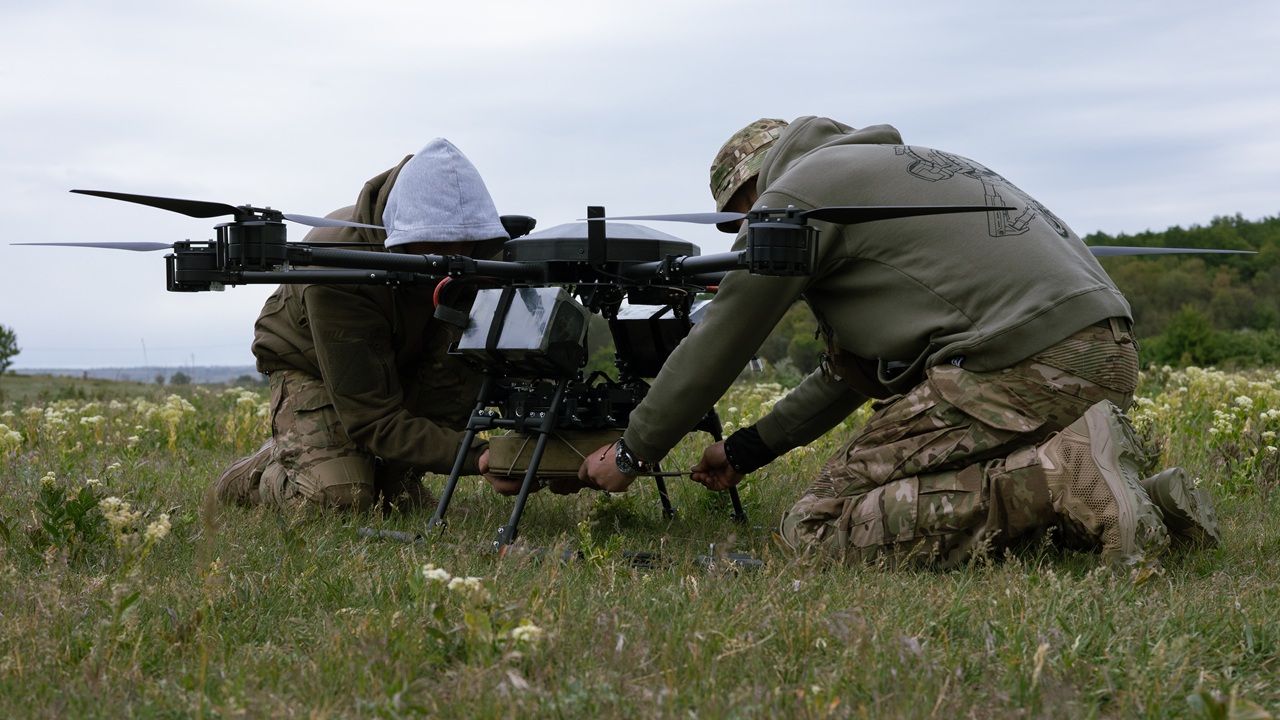
At the same time, the ability of Russian air defenses (AD) to intercept more than ten drones signals they remain at least somewhat effective now, even deep near the capital. But the fact that drones were launched from Ukraine to Moscow illustrates how long-range Ukrainian UAV capabilities are being successfully leveraged by Kyiv’s desperate military leaders.
Ukraine is in a strategic and tactical bind. The Americans are looking for the exits. The Europeans are mostly useless when it comes to defending Ukraine without American assistance. The Russians, meanwhile, are running roughshod over Ukrainian positions along the front in Ukraine.
Kyiv is desperate to make a show of how they can still fight as discussions mount that a ceasefire is at hand between the United States and Russia—one that will likely determine how much of Eastern Ukraine is handed to the Russians in exchange for peace. Plus, as the war stretches on, Moscow’s forces have started targeting energy infrastructure in Ukraine. Kyiv clearly wants to reciprocate, which they did in this attack.
For Russia, repeated intercepts will likely lead to further strengthening of their overall AD posture and possibly lead to more aggressive counterstrikes. At the same time, the need for emergency services in Moscow underscores that drone warfare is a persistent threat even far from the front.
As for the broader dynamics of the Ukraine War, these strikes (and subsequent interdictions) add layers to a war that is not just static frontlines—it’s also a war of attrition, deep strategic disruption, and massive psychological pressure across both sides.
The Drones Are a Distraction—and the End Is Still Near for Ukraine
With pressure on the Zelenskyy regime in Kyiv mounting, expect more drastic drone attacks conducted by Ukraine against targets deep within Russia. As the notorious Russian winter approaches, Ukrainian drones will continue targeting critical energy, logistical, and industrial targets deep within Russia in an attempt to signal to the world that the Ukrainians can still fight.
But they can’t. And eventually the Russians will overcome even this threat. So, anticipate a strengthening of Russian AD countermeasures, early-warning systems, and possibly increased domestic security and policing inside Russia.
The attempted Ukrainian strikes on Russian energy sources were not part of a war-winning strategy. They were another example of how close to defeat the Ukrainians are that they are desperately trying to hit Russian targets far from the front as a kind of revenge for Russia’s brutal invasion of Ukraine.
But one can only pretend for so long. One way or the other, this war is coming to a close. And Ukraine isn’t going to win it, no matter how deep inside Russia their drones strike.
About the Author: Brandon J. Weichert
Brandon J. Weichert is a senior national security editor at The National Interest. Recently, Weichert became the host of The National Security Hour on America Outloud News and iHeartRadio, where he discusses national security policy every Wednesday at 8pm Eastern. Weichert hosts a companion book talk series on Rumble entitled “National Security Talk.” He is also a contributor at Popular Mechanics and has consulted regularly with various government institutions and private organizations on geopolitical issues. Weichert’s writings have appeared in multiple publications, including The Washington Times, National Review, The American Spectator, MSN, and the Asia Times. His books include Winning Space: How America Remains a Superpower, Biohacked: China’s Race to Control Life, and The Shadow War: Iran’s Quest for Supremacy. His newest book, A Disaster of Our Own Making: How the West Lost Ukraine is available for purchase wherever books are sold. He can be followed via Twitter @WeTheBrandon.
Image: Shutterstock / Maria Taran.