The tradition of naming tanks for American generals began not with the Americans themselves, but with the British.
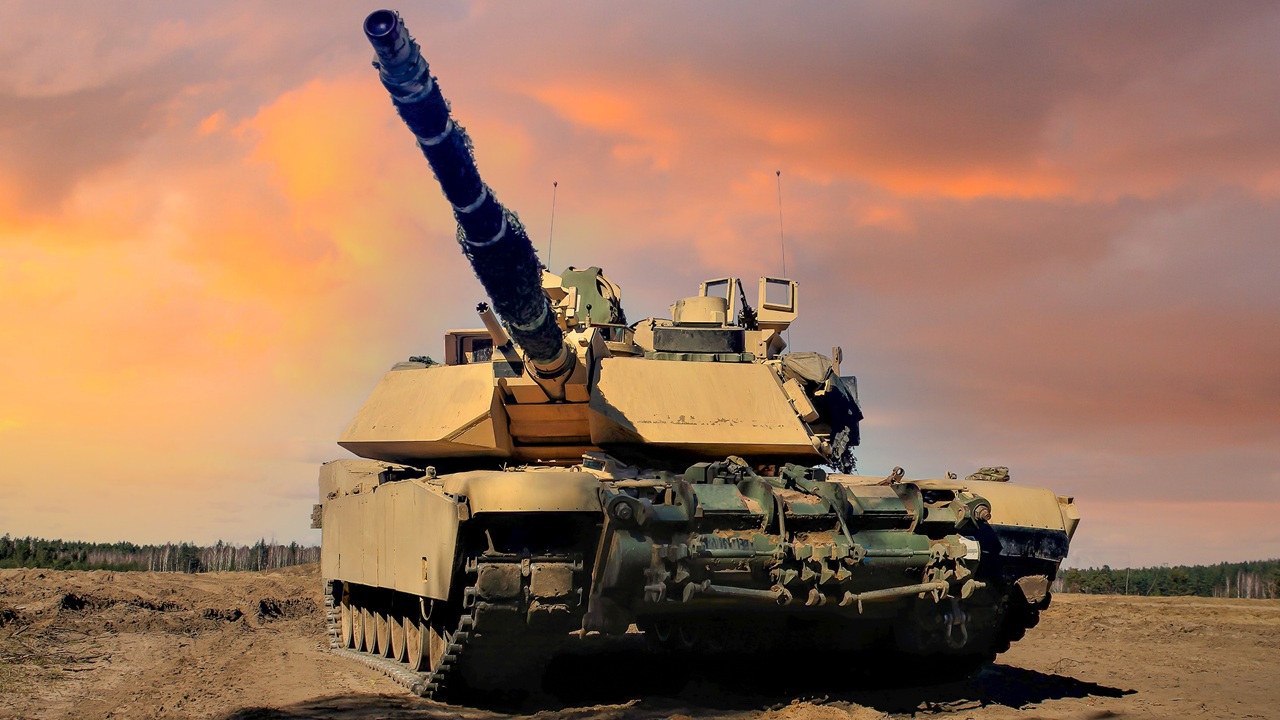
The United States military’s M1 Abrams main battle tank (MBT) first entered service with the United States Army in 1980. As the tank has been significantly updated and improved, it will almost certainly remain the primary MBT for the US military until the 2040s, meaning its service life could be 60 or more years.
That would be two decades longer than the 38 years that Creighton Abrams, who commanded US forces during the latter stage of the Vietnam War, spent in uniform. Abrams was a heavy cigar smoker and died just days before his 60th birthday. Abrams would likely have been honored to have a tank named after him, especially one with such a successful history.
The M1 was also just the latest in a series of US-made tanks named for famed American generals.
How Did Tanks Get Named for Famous Generals?
Not every tank has been named for a general, but every tank named for a person to date has been named for a soldier with stars on their uniform.
This practice began with the development of the M3 tank, and we can thank the British for it. The United States military didn’t initially see a need for “names” for land vehicles—which is why the license-built French Renault FT was simply designated the “M1917,” followed by the Light Tank, M1/M1 Combat Car, and the Light Tank, M2.
It was only when the British, desperately in need of tanks, purchased the Medium Tank, M3, that a name was given to it.
Two versions of the M3 were produced: one with US-pattern turrets, which the British Army designated the “Lee” for Confederate General Robert E. Lee, and the other with British-pattern turrets, designated the “Grant” for Union General Ulysses S. Grant.
It isn’t clear why Lee and Grant were selected, but obviously, the British felt a need to honor American military leaders—and weren’t about to honor men they had fought against, like Nathanael Greene, Horatio Gates, or Henry Knox!
The British continued this tradition by naming the M3 light tank (and later M5 variants) for Confederate General J.E.B. Stuart. The flamboyant general was known for his bold, daring cavalry raids. The name was fitting, as the M3/M5 served well as a scout.
The Medium Tank, M4, was subsequently, and famously, named for Union General William Tecumseh Sherman. Once the United States entered the war, Sherman tanks became a common feature of the battlefield across Africa, Italy, Europe, and even Eurasia—in large part due to the United States’ delivery of the tanks to the Soviet Union as part of the Lend-Lease program.
The last World War II tank named by the British for an American general was the Light Tank M24, which honored General Adna R. Chaffee Jr.—known as the “Father of the Armored Force” for his role in developing the US Army’s tank force.
The Naming Tradition Continues to the Present
The United States military adopted the practice and began naming its tanks after generals. The first was the M26 Pershing, introduced in the final months of World War II and again in the Korean War. Designed to replace the M4 Sherman, the name was named for General of the Armies John J. Pershing, who had led the American Expeditionary Force (AEF) during the First World War.
The United States military never gave a name to the 120mm gun combat tank M103, but it did honor George S. Patton by naming three tanks—the M46, M47, and M48—for Old Blood & Guts. The M60 was never officially a “Patton” tank, but is considered an improved descendant of the M48 Patton.
In the 1950s, the first American postwar light tank, the M41 Walker Bulldog, was named for General Walton Walker. It had been nicknamed the “Little Bulldog” before Walker’s untimely death in a Jeep accident, and the name was changed to honor Walker, who was already known as a “Bulldog” for his tough and persistent nature, notably during his leadership in the Korean War.
The US military then returned to the Civil War when it named the M551 “Sheridan” armored reconnaissance/airborne assault vehicle (AR/AAV) for Union General Philip Sheridan.
The Bradley IFV: The Exception that Proves the Rule?
It should also be noted that tanks are unique among the American military’s ground-based systems for having specific names. Tanks are, in other words, the exception to the rules. Most other vehicles were (and still are) known only by their model numbers.
Yet the M2 infantry fighting vehicle (IFV)—which is not a tank, despite some outward resemblance—was named for General Omar Nelson Bradley. The reason isn’t apparent, but the best answer is that General Bradley passed away in April 1981, and the M2 was already in the crosshairs, as it endured a protracted development history that lasted nearly 17 years. It was a vehicle born of compromise, and naming it after a respected general may have taken some of the spotlight off its troubles.
Finally, the US military’s now-canceled M10 Booker assault gun was named after two different soldiers, neither of whom was a general. That may have been an effort to convince lawmakers and other critics that it wasn’t really a “light tank,” because tanks are named for generals. Mostly, anyway.
About the Author: Peter Suciu
Peter Suciu has contributed over 3,200 published pieces to more than four dozen magazines and websites over a 30-year career in journalism. He regularly writes about military hardware, firearms history, cybersecurity, politics, and international affairs. Peter is also a contributing writer for Forbes and Clearance Jobs. He is based in Michigan. You can follow him on Twitter: @PeterSuciu. You can email the author: [email protected].
Image: Shutterstock / ArChe1993.