Europe needs a Baltic mission capable of seizing shadow-fleet tankers and defending energy infrastructure under Russian attack.
Energy is the new battlefield of the hybrid war between Russia and Europe. Attacks between Russia and Ukraine on their energy plants and grids, and the weaponization of energy, are back after many years, as a recent Foreign Affairs article argued.
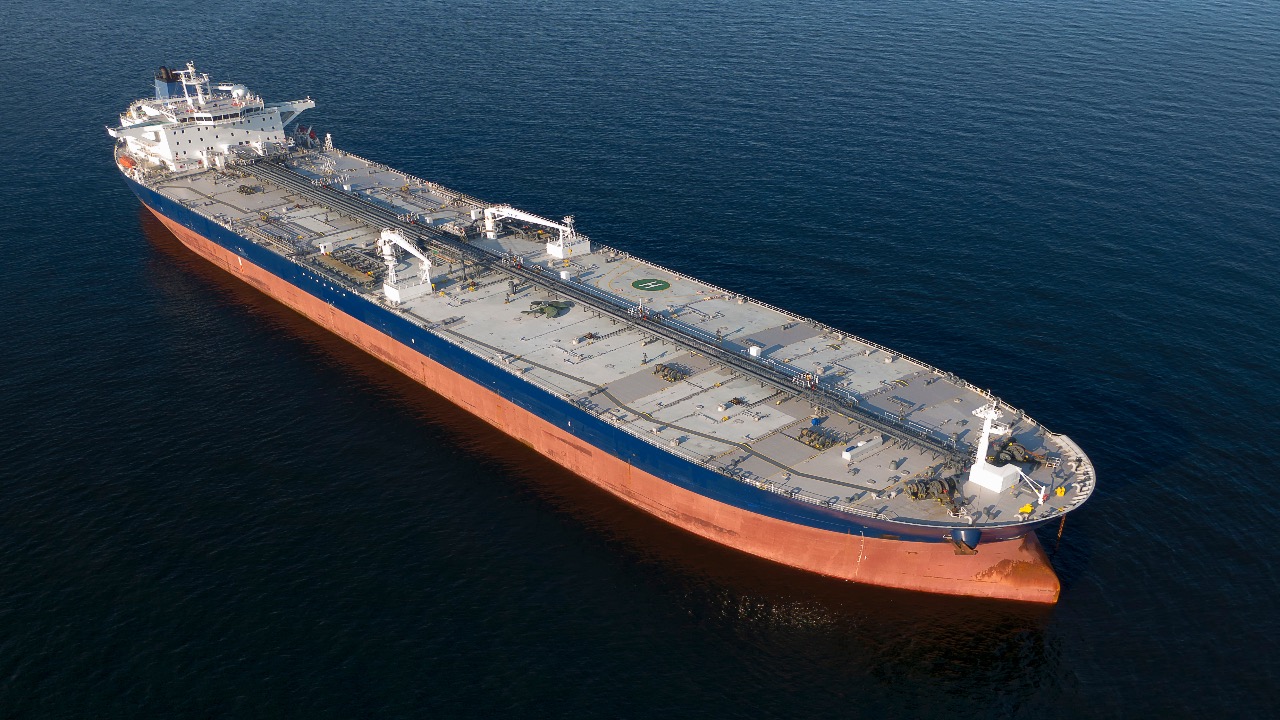
European sanctions cannot be the only approach to stop the Russian black market for war and shut off Russia’s oil income behind it. Its shadow fleet, composed of cargo ships that deliver crude oil across the globe, continues to power its revenue. Former Lithuanian Ambassador Eitvydas Bajarūnas argued that European countries should have choked Russia’s shadow fleet in the Baltic. Yet, once again, the European Union (EU) is strong with words of condemnation towards Russia but lacks the punching power.
Action has been few and far between. France recently seized a ship, but as Italian newspaper Corriere della Sera reports, Europe does not want to stop the Russian shadow fleet in the Baltic or Mediterranean because of possible Russian retaliation.
Europe’s Reluctance to Confront Russia
But Europe finds itself in a permanent state of hybrid conflict with Russia. Europe cannot fear retaliation when Russia has connections to drones over airports, explosions on railway tracks, and severed cables at the bottom of the sea. So, what is the real reason why Europe doesn’t react strongly?
The first hurdle is that Europe is not a band of Houthi terrorists. There is no legal framework for democracies to block or attack ships when they have the right of ‘innocent passage’.
Second, the risk of escalation is possible when Russian fighter jets escort the shadow fleet of oil tankers. Yet jet escorts do not signal an innocent cargo ship, raising European suspicion and giving reason for intervention.
Europe Needs a Strategy for Gray-Zone Warfare
Thus, what the European Union specifically needs is a new grand strategy for operating in a new era of gray zone warfare, as an increasing number of scholars argue. The recent report by the Italian Ministry of Defense, opposing the hybrid warfare coming from Russia, China, Iran, and North Korea, lays important groundwork towards greater policy action.
The problem is that the North Atlantic Treaty Organization (NATO) is still the main actor in the defense of Europe, and with the United States calling on its European allies to increase their burden-sharing, the EU must refine its tools. One such is the EU’s military naval operations, through its Common Security and Defense Policy.
To counter Russia’s shadow fleet, the EU needs a new naval operation in the Baltic. This requires not only having a strategy for the Baltic Sea, but also creating a fourth naval mission in the Northern and Eastern Flanks—mirroring the three missions that the EU has in the Southern flank: Operation Atalanta against pirates in the Horn of Africa, Operation Aspides against the Houthis in the Red Sea, and Operation IRINI for the arms embargo in Libya. The IRINI embargo risks not being renewed by the United Nations Security Council (UNSC)—as Russia could block its extension by the end of this month, collapsing the embargo at the UN level. Yet, the EU itself has prolonged the IRINI operation until March 2027 and expanded its mandate to include monitoring and surveillance activities, information gathering to cover illicit activities other than the trafficking of arms from Libya, and the collection of information useful to the protection of critical maritime infrastructure. However, the rules of engagement should be expanded to also seize the Russian shadow fleet when suspected of oil smuggling.
Expanding EU efforts would combat Russia’s hybrid warfare being waged on multiple domains. It would not only protect the energy and data infrastructures under sabotage, but also control oil smuggling by the Russian shadow fleet, which funds Putin’s war against Ukraine, and increase its deterrence posture in Maritime Security Awareness. In fact, Europe’s security future might depend more on its waters than its skies and its land.
Operational Priorities for an EU Baltic Mission
First, half of Russian crude oil passes through the Baltic Sea, so the operation should focus on search and seizure operations there. Second, cables for data, electricity, and internet in the Baltic Sea are often under sabotage, so the operation should help in maritime awareness against this type of attack. Finally, deterrence by denial, to deny shadow fleet ships access to port facilities, should be coupled with deterrence by punishment, with the seizing of the fleet every time the boarding shows that the ship violated the oil embargo and sanctions of the EU.
Furthermore, there are other tools that can be applied, such as flag state reforms to deny shadow fleet ships access to port facilities.
Political Will Is the EU’s Biggest Challenge to a Baltic Mission
This will undoubtedly require political will and a united voice from the European Union, which is never a certainty. Collective action and security on the EU-wide front face internal resistance from its own members. Hungary and Slovakia, hooked to cheap Russian energy and political partnerships with the Kremlin, will not work towards securing European borders against Russian gray zone aggression. Solutions and compromises will need to be found to secure the future of the European Union and its sovereignty.
While the IRINI operation relies on Mediterranean countries that sometimes lack awareness and interest in retaliating against Russia, an EU Baltic Sea operation would have a different approach by the Baltic members. They remember the Soviet Union’s abuses and are neighbors to the continual horrors of Russia’s invasion of Ukraine, which is why they want to support Mediterranean operations, as shown by the recent visit of the Latvian Chief of Defense to IRINI.
The European Union must wake up and understand that this is a crucial time for the future of the Union and for the Western-led rules-based order. The Kremlin’s gray zone aggressions towards European countries are continual probes, testing whether Europe will stand up to future attacks on the old continent. Europe has the chance now to strike back at Russia, using offensive means also in the hybrid war, limiting how it funds its war against Ukraine, and perhaps in the near future, an attack against another European country.
About the Authors: Dr. Maurizio Geri and Niccolò Comini
Dr. Maurizio Geri is a former NATO analyst, an Italian Navy lieutenant POLAD reservist, and a GMU postdoctoral researcher/EU Marie Curie Fellow (currently at the German Marshall Fund in Brussels) who specializes in EU-NATO cooperation in tech and Russian-Chinese hybrid warfare in the energy-resources-technology security nexus.
His research has received funding from the EU’s Horizon 2020 program under the Marie Skłodowska-Curie grant agreement No. 101105349. Views and opinions expressed are, however, those of the author only and do not necessarily reflect those of the EU or the Research Executive Agency. Neither the EU nor the granting authority can be held responsible for them.
Niccolò Comini is a graduate of Kenyon College. He writes about Italian politics and foreign policy, and has been published on CEPA’s Europe’s Edge and Foreign Policy.
Image: Nickeo23/shutterstock