This is the first time Ukraine has fired ATACMS at Russia under the second Trump administration.
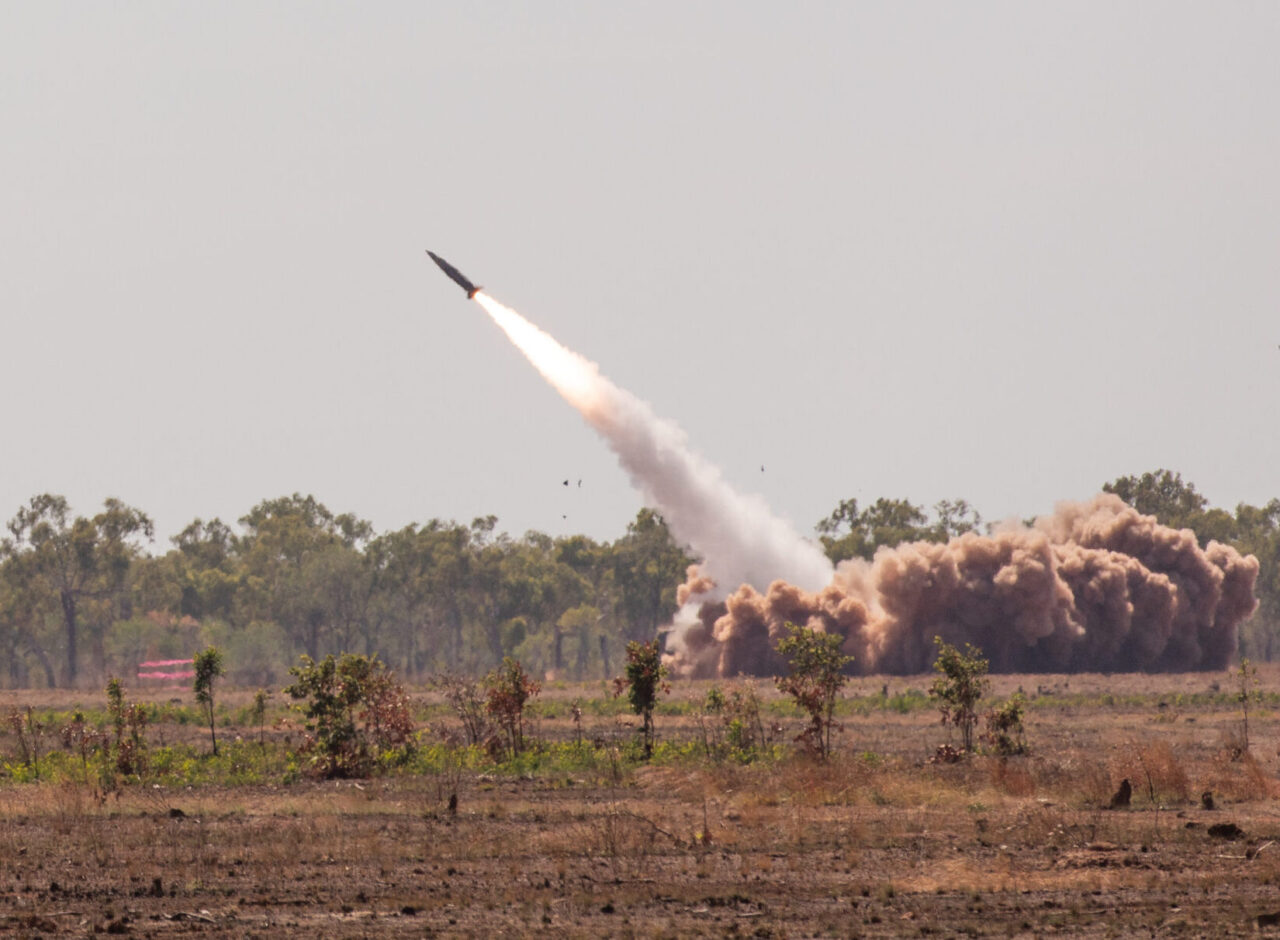
Ukrainian forces launched US-supplied Army Tactical Missile Systems (ATACMS) toward the southwestern Russian city of Voronezh earlier this week. Both Russia’s Defense Ministry and Ukrainian sources confirmed the barrage. According to Moscow, Kyiv fired four of the surface-to-surface ballistic missiles toward civilian targets in its territory. “Russian S-400 air defence crews and Pantsir missile and gun systems shot down all ATACMS missiles,” Moscow’s Defense Ministry said on Telegram, detailing that falling debris from the destroyed missiles struck the roofs of a retirement home, an orphanage, and one house. Ukraine said that this barrage was part of a “precision strike” targeting unspecified military assets within Russia’s territory.
Prospects for a lasting ceasefire between the two nations appear dim at the moment, considering the sharp uptick in cross-border attacks launched by both sides of the conflict.
What are ATACMS?
Last spring, Ukrainian forces used the powerful long-range ATACMS for the first time when they struck targets roughly 100 miles inside Crimea’s border. The former Biden White House provided these lethal ballistic missile systems as part of a March 2024 military aid package. This powerful surface-to-air missile (SAM) system is capable of reaching targets up to 300 km (186 miles) away. This extensive range has proven to be a critical asset for Ukraine in the nation’s barrages striking deep within Russian territory. The Lockheed Martin-designed missiles were designed during the Cold War as part of an effort to field a new conventional tactical ballistic missile. ATACMS was specifically conceptualized to replace the MGM-52 Lance missile at the time.
Several ATACMS variants have emerged over the years, each featuring unique specs that make the family of systems truly unparalleled. The Block I iteration represents the standard version of ATACMS. Block Is function like cluster bombs, meaning their submunitions can be dispersed over a greater target area. As explained by the Center for Strategic and International Studies, “The ATACMS Block 1 is launched from a modified version of MLRS M270 AVMRL (Armored Vehicle Multiple Rocket Launcher), which exchanges twelve MRLS rockets for two ATACMS Block 1 missiles. A single ATACMS Block 1 can also be carried and fired by a US Army HIMARS XM142 wheeled light vehicle.” The second type of warhead that can be fired from ATACMs is a 225kg single warhead, high-explosive variant designed to be able to strike larger structures and facilities.
While Kyiv has deployed its ATACMS stockpiles previously, this week’s strike marks the first time the country has used its US-supplied missile systems during the current Trump administration. Over the summer, The Wall Street Journal reported that Ukraine was prohibited from deploying its long-range missiles to target Russian territory for months as a result of a review process that directly blocked its use of ATACMS. Last month, the United States lifted this significant restriction, as part of the White House’s effort to push Russian president Vladimir Putin into discussing a ceasefire proposal.
Although the Trump team still aims to mediate a lasting peace between Russia and Ukraine, cross-border attacks continue to impact this effort.
About the Author: Maya Carlin
Maya Carlin, national security writer with The National Interest, is an analyst with the Center for Security Policy and a former Anna Sobol Levy Fellow at IDC Herzliya in Israel. She has over 1,000 articles published over the last several years on various defense issues. Carlin has bylines in many publications, including The National Interest, Jerusalem Post, and Times of Israel. You can follow her on Twitter: @MayaCarlin.
Image: DVIDS.