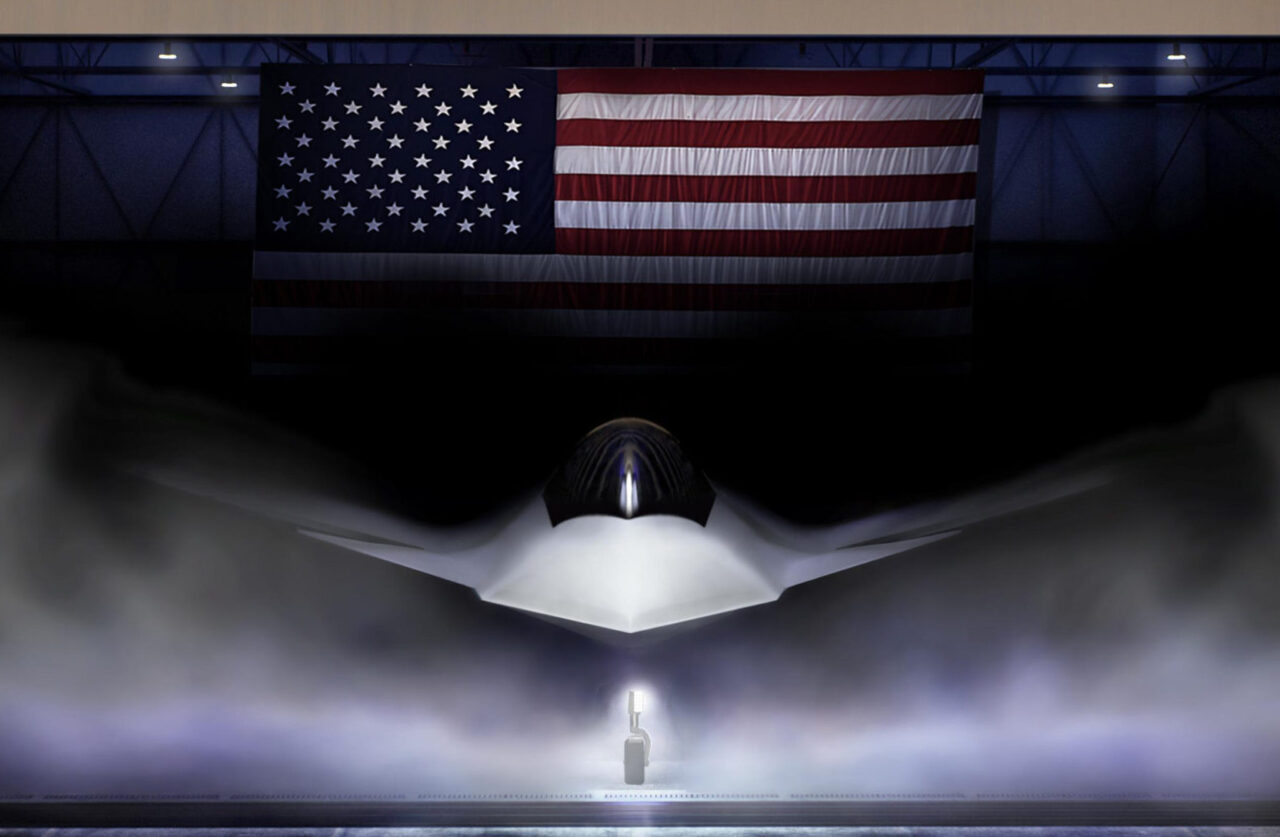
Production of the sixth-generation fighter component of the NGAD F-47 is advancing nicely, Boeing CEO says.
Big-name manufacturer Boeing was tapped to construct the US Air Force’s Next-Generation Air Dominance (NGAD) fighter earlier this year. The upcoming sixth-generation “family of systems” is expected to set the stage for next-level air superiority when it reaches operational capacity in the near future. Steve Parker, Boeing’s CEO and the president of Boeing Defense, Space and Security, recently said that the sixth-generation fighter component of NGAD F-47 is advancing nicely on the production front, noting that the jet’s production is a “testament to the maturity of our design and pedigree coming off the prototype.”
While at a roundtable ahead of the 2025 Dubai Air Show, Parker revealed that the F-47’s acceleration would not be made possible without Boeing’s secretive Phantom Works division. Air Force chief of staff David Allvin mirrored this rhetoric earlier this year, stating that “For the past five years, the X-planes for this aircraft have been quietly laying the foundation for the F-47 — flying hundreds of hours, testing cutting-edge concepts, and proving that we can push the envelope of technology with confidence.”
Two separate NGAD risk-reduction demonstrators developed by Boeing and competitor Lockheed Martin first flew back in 2019 and 2022. According to DARPA, these X-planes each logged hundreds of hours as part of their respective testing phases. While little information surrounding the outcome of these test flights is classified, Air Force officials have verified that the data gathered from these demonstrators has been incorporated into the development of the F-47. Specifically, the sixth-generation jet’s systems architecture.
What We Know About the NGAD
The Air Force’s upcoming next-gen fighter series remains highly covert; however, the service has divulged some preliminary specs and capabilities surrounding the platform. Over the summer, Air Force chief of staff Allvin published a graphic online that said the F-47 will have a combat radius of more than 1,000 nautical miles and will be able to reach speeds in excess of Mach 2 (times the speed of sound). According to Alvin, the Air Force is expected to procure at least 185 F-47s.
In addition to the sixth-generation fighter component, a slew of highly specialized and autonomous unmanned aerial vehicles (UAVs) will make up NGAD. Dubbed as Collaborative Combat Aircraft (CCAs), these “loyal wingmen drones” will be far less expensive to produce than their fighter component. The Air Force has previously stated its intent to purchase around 1,000 CCAs at a minimum. As detailed by Defense Scoop, “The extra mass provided by CCAs specifically developed for high-end fights will also help the Air Force in establishing air superiority, reducing any capability gap caused by a lack of operational F-22s.”
NGAD is not the only sixth-generation project emerging from the US military in the near future. The B-21 “Raider” stealth bomber and the Navy’s F/A-XX fighter jet will soon join the F-47 in the skies. In order to retain an edge over US adversaries’ respective next-generation proposals, the timely introduction of all of these cutting-edge airframes is essential.
About the Author: Maya Carlin
Maya Carlin, national security writer with The National Interest, is an analyst with the Center for Security Policy and a former Anna Sobol Levy Fellow at IDC Herzliya in Israel. She has over 1,000 articles published over the last several years on various defense issues. Carlin has bylines in many publications, including The National Interest, Jerusalem Post, and Times of Israel. You can follow her on Twitter: @MayaCarlin.
Image: DVIDS.