Häyhä is believed to have been a major inspiration for Aatami Korpi, the stoic main character of the ongoing “Sisu” film series.
A new Finnish film series that looks more like a cross between Rambo and John Wick than a historical war film is taking world audiences by storm. The series is called Sisu, and its newest installment, called Road to Revenge, depicts the story of Simo Häyhä, who comes across in the films as the most terrifying man to ever pick up a rifle in a blizzard.
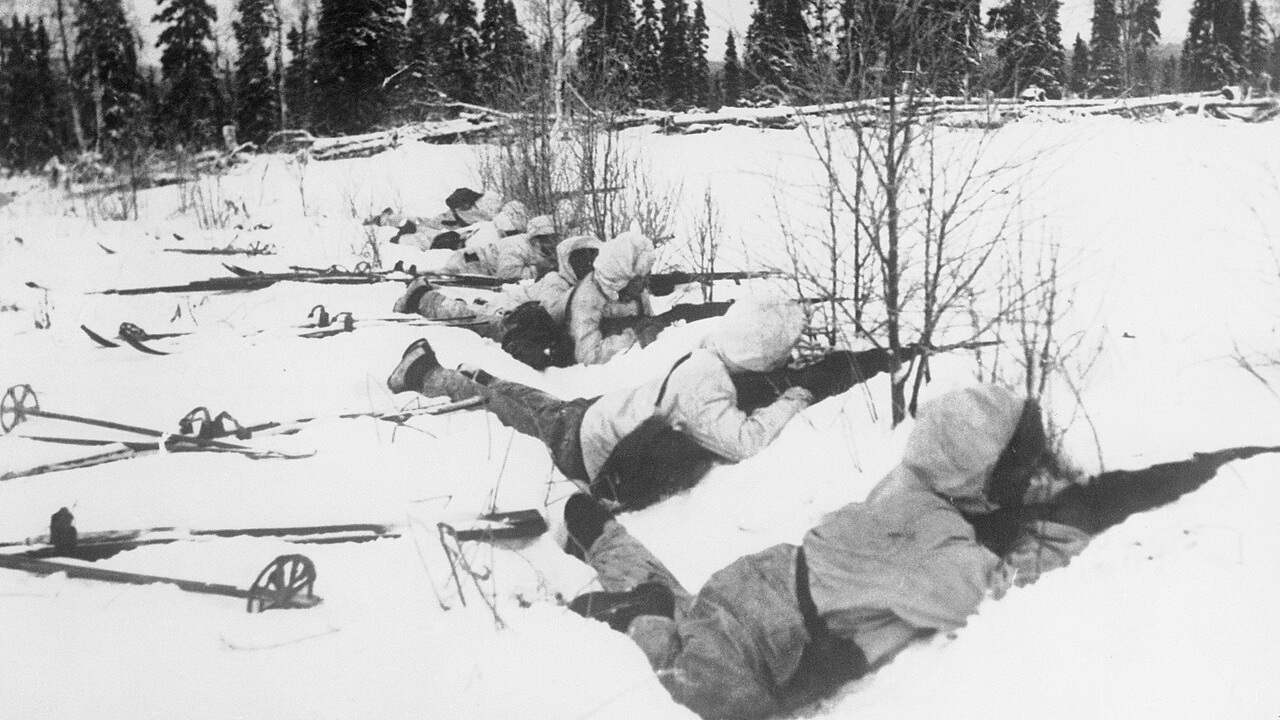
During the Winter War of 1939-40, the small northern European nation of Finland bore the brunt of the wrath of Stalin’s Red Army. The Reds had tanks, planes, artillery, and numbers. As the films depict, the Finns like Häyhä possessed only bolt-action rifles and pockets full of ammunition. In what have now become iconic images from the film series, the Finns were covered in frost and snow, and were driven by an indomitable will to push beyond the limits of what was humanly possible (this is what the Finnish word Sisu basically translates to).
The Winter War: When a Sniper Became a Nation’s Shield
The Winter War was first, and foremost, a sniper’s war. It was an insurgency directed against the invading Soviet Red Army.
Soviet dictator Joseph Stalin feared that the Finns would permit Adolf Hitler’s Germany to use their territory to attack the USSR. Accordingly, he dreamt of extending the Soviet defensive perimeter well beyond the border of Leningrad (modern-day St. Petersburg). Of course, the call for a northern defensive perimeter by Moscow was self-serving, too: it allowed for the Soviets to extend their territory into Finland.
When the Reds invaded, the Fins had only their knowledge of the frozen Arctic territory they called home. They also had a culture of hunting and fierce living in the frozen wilds of their beautiful country. This gave them a decisive edge in the Winter War.
In many ways, Hähyä himself was emblematic of the Finns’ easy move from rugged huntsmen to deadly warriors. Born in 1905 into a farmer’s family of eight children, he joined the Finnish civil guard for mandatory military service during the 1920s and excelled in competition shooting before returning to the family farm. When the Soviets invaded in 1939, he rejoined the military, still armed with his Civil Guard SAKO M/28-30 rifle—a Finnish-made derivative of the Russian Mosin-Nagant rifle—and entered into history.
Hähyä didn’t use a scope because it could reflect sunlight, giving away his concealed position. Similarly, he didn’t employ a spotter—a fellow combatant that most snipers utilize to help track and identify targets. In fact, Hähyä was quite stoic. The cunning Finnish warrior simply laid in the snow and, with ruthless Finnish efficiency, turned Soviet soldiers into grim statistics.
Simo Häyhä Turned Snow into a Weapon
In his roughly 100 days of picking off Russians who had violated Finnish territory, Hähyä’s confirmed kill tally sits at over 500 kills—making him the deadliest sniper in recorded history. The Soviets, ever masterful in the area of effective nicknames, dubbed Hähyä “The White Death.”
As a result of Hähyä’s fearsome status among the Red Army rank-and-file, Soviet commanders began sending entire units just to hunt him down. Yet Hähyä outfoxed the Soviet bear at every turn—hence why his exploits in the Winter War have become the basis of a wildly successful action film franchise.
Soviet hunter-killer units even tried to flush the White Death out of his hiding spots with artillery barrages. Like a creature from Nordic folklore, Hähyä never flinched and never exposed himself, despite the artillery fusillades. This incredibly resourceful man would make snowbanks into bunkers. One story (as recounted in the classic Sabaton song “White Death”) recounts how Hähyä liked to put snow in his mouth to hide his breath—believing that the vapors released from his breathing in the cold environment might make him a target for skillful Soviet snipers who were hunting him.
While being hunted by an especially skilled Soviet marksman, the Finnish ice warrior realized he was being hunted and turned the proverbial tables on the Red sniper. The result was gruesome for the Soviet sniper: using his SAKO rifle, Hähyä shot him through the face—from over 400 yards away.
It was Hähyä’s perseverance in the face of overwhelming odds that both made him a Finnish folk hero as well as the basis for the Sisu films.
Near the end of the war, Hähyä’s luck finally ran out. On March 6, 1940, a Soviet soldier shot him in the face, destroying part of his jaw. A week later, Hähyä awoke in the hospital—learning that the war had ended, and he had erroneously been listed as having been killed in action. After he corrected the newspaper and returned to his family, Hähyä lived the rest of his life in relative peace in southeastern Finland, and died in 2002 at the age of 96.
Today, Europe Needs the Sisu Spirit More Than Ever
Today, many Europeans are looking for heroes from their past of the kind that Hähyä; they want a reminder of the fighting spirit that once reigned supreme on the continent. Europeans are also looking for greater cultural meaning as the continent has fundamentally changed after decades of migration, open borders, and a long peace that has existed since the end of the Cold War. And with that peace possibly ending sooner than anyone would like on the continent, Europeans want to remember a time when one of their own stood up against the imposing might of Russian aggression.
This, too, is a reason for why the Sisu films are being made today and why they are so popular.
About the Author: Brandon J. Weichert
Brandon J. Weichert is a senior national security editor at The National Interest. Recently, Weichert became the host of The National Security Hour on America Outloud News and iHeartRadio, where he discusses national security policy every Wednesday at 8pm Eastern. Weichert hosts a companion book talk series on Rumble entitled “National Security Talk.” He is also a contributor at Popular Mechanics and has consulted regularly with various government institutions and private organizations on geopolitical issues. Weichert’s writings have appeared in multiple publications, including The Washington Times, National Review, The American Spectator, MSN, and the Asia Times. His books include Winning Space: How America Remains a Superpower, Biohacked: China’s Race to Control Life, and The Shadow War: Iran’s Quest for Supremacy. His newest book, A Disaster of Our Own Making: How the West Lost Ukraine is available for purchase wherever books are sold. He can be followed via Twitter @WeTheBrandon.
Image: Wikimedia Commons.