An outstanding response to gender ideology by His Excellency Daniel Thomas, Bishop of Toledo, suggests that individual bishops are more equipped to produce quality work than the Roman Curia or the United States Conference of Catholic Bishops. It would be wonderful if something as clear and comprehensive as The Body Reveals the Person could have been produced by one of those bureaucracies.
In the vein of Popes Francis and Leo XIV, Bishop Thomas begins with the words of a shepherd: “Those who experience confusion about their sexual identities…suffer greatly. To those who struggle with gender confusion, I want you to know that you are not alone. Christ loves you. The Church loves you. And I love you.”
We don’t have to look far to see how many young people are yearning to hear such words. Just days before his horrific massacre at Annunciation School in Minneapolis, Robin Westman, a 23-year-old male “transitioning” to a female, wrote “FIND ME I AM BEGGING FOR HELP, I AM SCREAMING FOR HELP.”
The Church is compelled to offer her help in the form of a rich teaching on human sexuality. The problem, as Bishop Thomas points out, is that the effects of transgender ideology are so “far-reaching” that we are instantly “canceled” if we dare speak out. Bishop Thomas joins voices with Jason Evert in courageously telling young people the flat-out truth: “You were not born into the wrong body. You were born into the wrong culture…it is the culture that needs to be reconstructed, not you.”
A Clear Message
After reviewing staggering statistics on the rising number of teens self-identifying as LGBTQ, transgender, or gender-diverse, the document presents a compelling overview of the Church’s unitive anthropology which insists that, created in the image of God, we are “personal, bodily, and sexually differentiated (i.e., male and female)” and that “both the body and the soul have personal value.”
The document approaches the question of sexual differentiation from both a biblical and philosophical perspective, underscoring the Church’s teaching “that both the unitive dimension of human sexuality, by which man and woman enjoy personal union as one flesh, and the procreative dimension, by which that union, with God’s help, brings new persons into being, are of personal significance.”
Equally compelling is the document’s astute analysis of philosophical dualism (i.e., a strict separation of body and soul) as the driving force behind gender ideology.
A Shared Cross
But the most remarkable aspect of Bishop Thomas’s statement is indeed its pastoral tone. Although “their crosses may feel unendurably heavy,” he writes, “we are called to be like Simon of Cyrene and help them bear their crosses. We should listen to their stories, be compassionate when they speak about their confused feelings and body related distress, offer them help when we can, and assure them of God’s personal love for them.”
At the same time, “it would be a mistake to view people’s feeling about their bodies as reliable indicators of what is true or to let those feelings dictate the therapeutic response…Sex is determined at conception, observed in utero or at birth, and cannot be changed.”
The Urgency
The document heightens the urgency of unveiling the destructiveness of mutilating, removing, or reconfiguring perfectly healthy bodily organs under the specious guise of improving an individual’s mental health or quality of life. Advocates for these procedures point to reduced rates of depression and anxiety with absolutely no deeper analysis of the underlying causes of depression and anxiety among young people in the first place, not to mention the long-term depression and anxiety that ensue after the procedures.
The Body Reveals the Person shows that these more urgent issues are inextricably tied to what seem innocuous cultural attitudes towards language. We are expected to use “language—such as pronouns—that conforms to people’s chosen gender identity even when this contradicts the truth of their biological identity.”
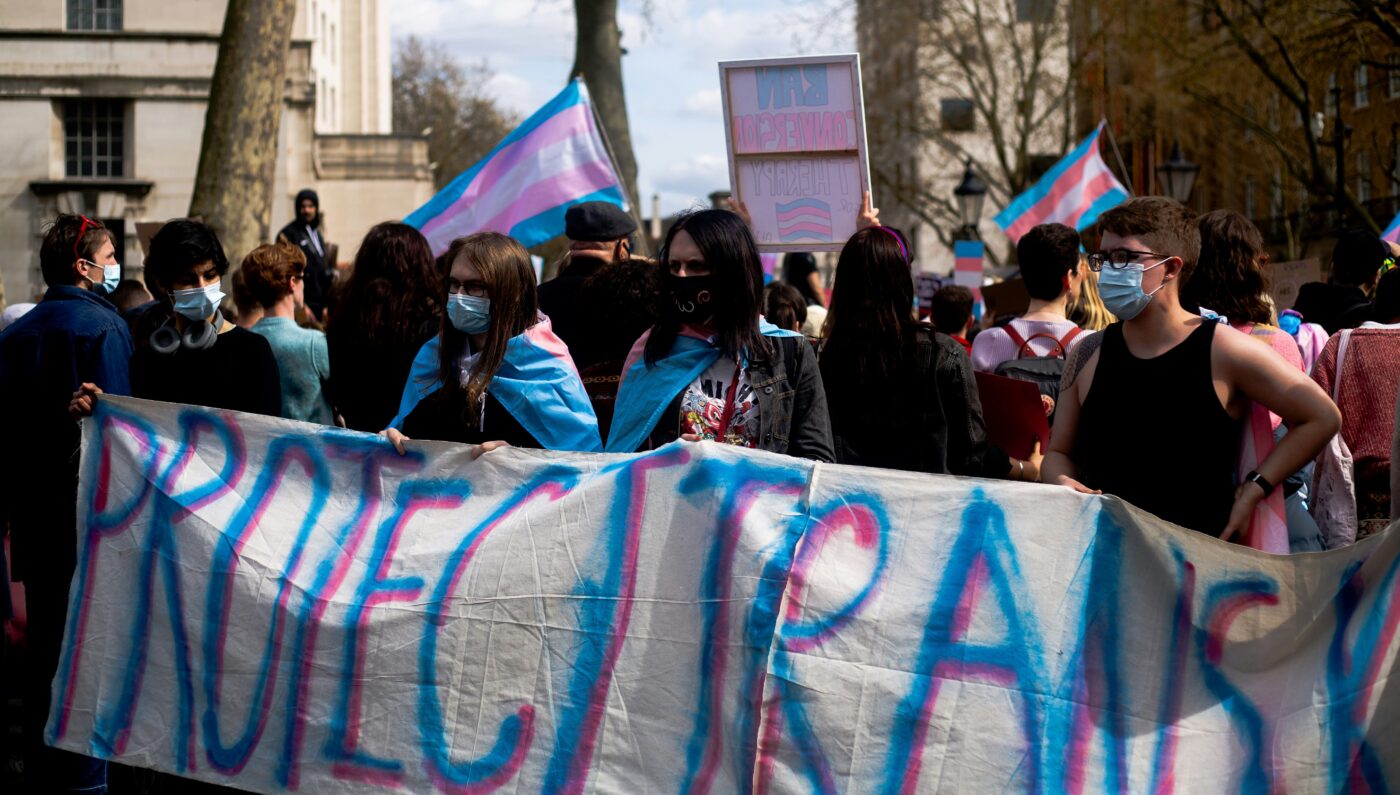
The struggle against transgenderism is bound to increase in the coming years. The issue can be addressed at many levels, but the Church has a unique place in proclaiming the truth. She rests not only on the revealed Word of God, but highly refined insights into the human person made possible through revelation, though philosophically accessible apart from it. This, I believe, is the document’s strongest suit. Unlike other institutions—be they political or scientific—the Church is empowered above all “to communicate first and foremost the love of God in Jesus Christ by proclaiming the same gospel we all need to hear.”
The Gospel we all need to hear—the Gospel that compels us to share Christ with others—should ignite us to reprioritize our teaching and preaching priorities. Nothing could be more fundamental to that reprioritization than an honest acknowledgment of—and unwavering commitment to—the truth of the human person as man and woman, created and loved by God, and redeemed by Christ Jesus.
Photo by Karollyne Videira Hubert on Unsplash