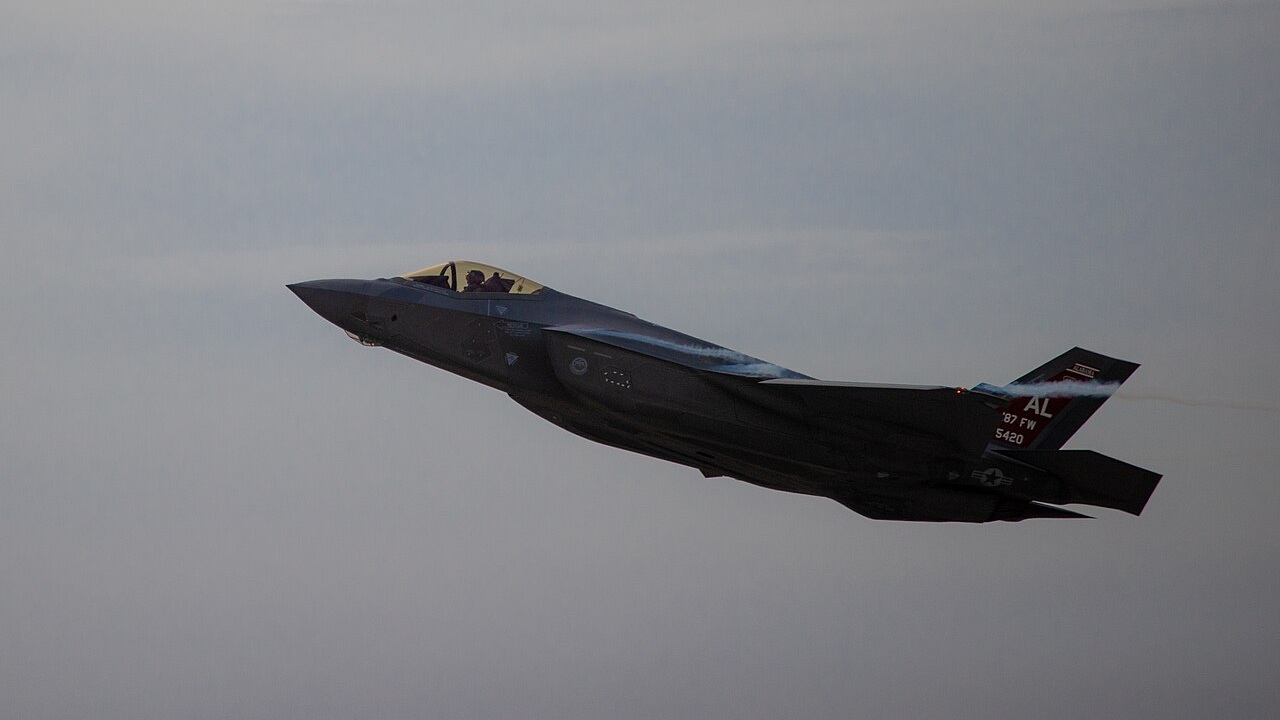
It is possible that the “Combat Cloud,” a program designed to link advanced fighter jets to ground sensors and other aircraft, could be salvaged if Europe’s FCAS program collapsed.
Europe’s most significant effort to develop a sixth-generation manned fighter is unlikely to ever get off the ground. The Future Combat Air System (FCAS) program has faced turbulence since it was launched as a joint defense project in 2017 with partners Germany, France, and Spain.
Although efforts have been made to preserve the FCAS, Berlin and Paris have been discussing “downsizing” the program, pivoting to the development of a “combat cloud,” a command-and-control system originally part of the larger project.
The FCAS Faces an Uncertain Future
The goal of the FCAS program from the beginning was ambitious. It sought to redefine air combat, promote military independence from non-European nations (i.e. the United States), and strengthen defense partnerships within NATO. However, Germany’s Airbus and France’s Dassault Aviation have continued to disagree over numerous issues related to the development of the sixth-generation fighter, including the sharing of intellectual property and the percentage of labor each company would contribute.
As previously reported, this is essentially a repeat of what happened with the Future European Fighter Aircraft program in the 1980s. At that time, France withdrew from the program and opted to pursue its own initiative, resulting in the development of the Dassault Rafale. The other parties ultimately completed the Eurofighter Typhoon.
“Historically, [France] has developed most of its military systems alone, retaining control of the supply chain, export controls, and more,” Aerospace Global News reported, adding that the French aerospace firm would likely go it alone: “Dassault chief Eric Trappier has already stated that Dassault is willing and able to develop the aircraft alone.”
Germany, and perhaps even Spain, may seek to join the UK-led Global Combat Air Programme (GCAP), which the UK has been more open to than Japan, another partner along with Italy. However, even if that does happen, Germany would have a much smaller role, but at least it would have a seat at a sixth-generation table.
Another option for Germany would be to seek a partnership with Sweden, NATO’s newest member, in developing the eventual replacement for the JAS 39 Gripen. Stockholm had previously been a partner with the UK and Italy before bailing out when the Tempest program merged with Japan’s F-X initiative.
The “Combat Cloud” Could Be Separated from the FCAS Program
At this point, the FCAS won’t deliver a manned fighter that will soar in the heavens above; yet, it could still result in the development of the “combat cloud,” a networked platform that could link manned fighters to sensors, radar, unmanned aerial vehicles (UAVs), and other systems, including those on land and at sea.
It would leverage advances in artificial intelligence (AI) and machine learning to enhance the capabilities of fighter jets in service with NATO and improve interoperability. The combat cloud had long been a pillar of FCAS.
“We can live with several jets in Europe, but we need one cloud system for all of them,” an official close to the matter told The Financial Times earlier this week.
The original timeline had called for this networked battle system in the sky to be operational by 2040. Still, Germany and France are now discussing how it could be implemented sooner, perhaps by as early as 2030.
One reason the combat cloud could still be salvaged, even if the larger FCAS program is officially ended, is that Dassault Aviation isn’t actually a part of it. Germany’s Airbus, Spain’s Indra, and France’s Thales have taken the lead on the effort.
“All the other elements [of FCAS] are working well. Why would we stop doing that? There is no need for FCAS to founder completely—there is a need for a combat cloud system,” a second official also told The Financial Times.
Where there is currently agreement is that Europe needs a networked command system that can be independent of the United States, especially after rumors circulated this spring that an “F-35 kill switch” was installed in the Lockheed Martin fifth-generation manned fighter, which could disable the aircraft remotely.
About the Author: Peter Suciu
Peter Suciu has contributed over 3,200 published pieces to more than four dozen magazines and websites over a 30-year career in journalism. He regularly writes about military hardware, firearms history, cybersecurity, politics, and international affairs. Peter is also a contributing writer for Forbes and Clearance Jobs. He is based in Michigan. You can follow him on Twitter: @PeterSuciu. You can email the author: [email protected].
Image: Wikimedia Commons.