The International Atomic Energy Agency (IAEA), the United Nations nuclear watchdog, voted on a resolution on Thursday demanding full cooperation from Iran and “precise information” about its stockpile of enriched uranium.
The Iranian Foreign Ministry swiftly dismissed the resolution as “anti-Iranian” and threatened reprisals.
The 35 members of the IAEA Board of Governors passed a resolution on Thursday stating that Iran must inform the agency “without delay” of the status of its uranium stockpile, and the current conditions of the uranium enrichment facilities at Fordow, Natanz, and Isfahan, which were bombed by the United States in June.
The resolution called on Iran to “provide the agency without delay with precise information on nuclear material accountancy and safeguarded nuclear facilities in Iran, and grant the agency all access it requires to verify this information.”
“Our message is clear: Iran must resolve its safeguards issues without delay. It must provide practical cooperation through access, answers, restoration of monitoring, to enable the agency to do its job and help rebuild confidence,” the United States, United Kingdom, France, and Germany said in a joint statement to the IAEA board.
The resolution passed 19-3, with 12 members of the board abstaining. Russia, China, and Niger, a major uranium exporter, were the votes against.
Iran has refused to allow IAEA inspectors access to its uranium sites since June, when the U.S. and Israel launched airstrikes against Iran’s nuclear program, following a rare IAEA censure against Iran for failing to meet its nuclear non-proliferation obligations.
Iran rejected that June resolution from the IAEA board of governors as “completely political and biased” and it rejected the new resolution passed on Thursday in similar terms.
Even before the latest IAEA vote, Iran issued a joint statement with its Russian and Chinese allies saying that a new resolution against it would be “provocative,” and would “jeopardize and potentially nullify the considerable efforts undertaken by the Director-General and Iran to advance dialogue and cooperation.”
IAEA Director-General Rafael Grossi has doggedly insisted on negotiations and dialogue with Iran, even though he occasionally vents some exasperation with Iranian obfuscation and intransigence.
“I continue to be convinced that there is no other solution but a diplomatic solution to this whole thing, and that requires engagement and understanding on our part and also full compliance on the part of Iran,” Grossi told the IAEA Board of Governors on Friday.
Grossi expressed disappointment with Iran for not allowing inspections at some of its nuclear facilities, but he was optimistic about eventually gaining access to Iran’s inventory of enriched uranium. Grossi and Iranian Foreign Minister Abbas Araghchi signed a technical agreement in September that was supposed to clear the way for inspections to resume, but few details of the deal have been made public.
Soon after that agreement was signed, the U.N. Security Council (UNSC) voted to activate “snapback” sanctions on Iran for failing to meet its obligations under the 2015 nuclear deal. Iran was enraged by the snapback sanctions, while its ally Russia said it would ignore them. Despite Grossi’s perpetual optimism, there have been few signs since September that Iran was planning to work more enthusiastically with U.N. nuclear inspectors.
Iran’s ambassador to the IAEA, Reza Najafi, said Thursday’s resolution would have “consequences” and Tehran would “announce the consequences later.”
Later on Thursday, Iran announced it was withdrawing from the agreement it signed in September to resume nuclear inspections.
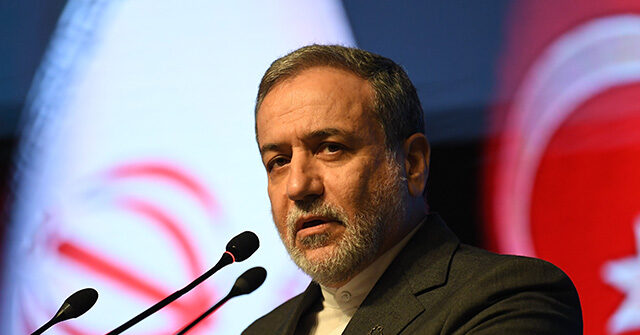
“This understanding is no longer valid and should be considered terminated,” Araghchi said in a communique to the IAEA.
“Given that the E3 and the US seek escalation, they know full well that the official termination of the Cairo Agreement is the direct outcome of their provocations,” the foreign minister said on social media. The E3 are the European signatories to the 2015 nuclear deal, namely the UK, France, and Germany.