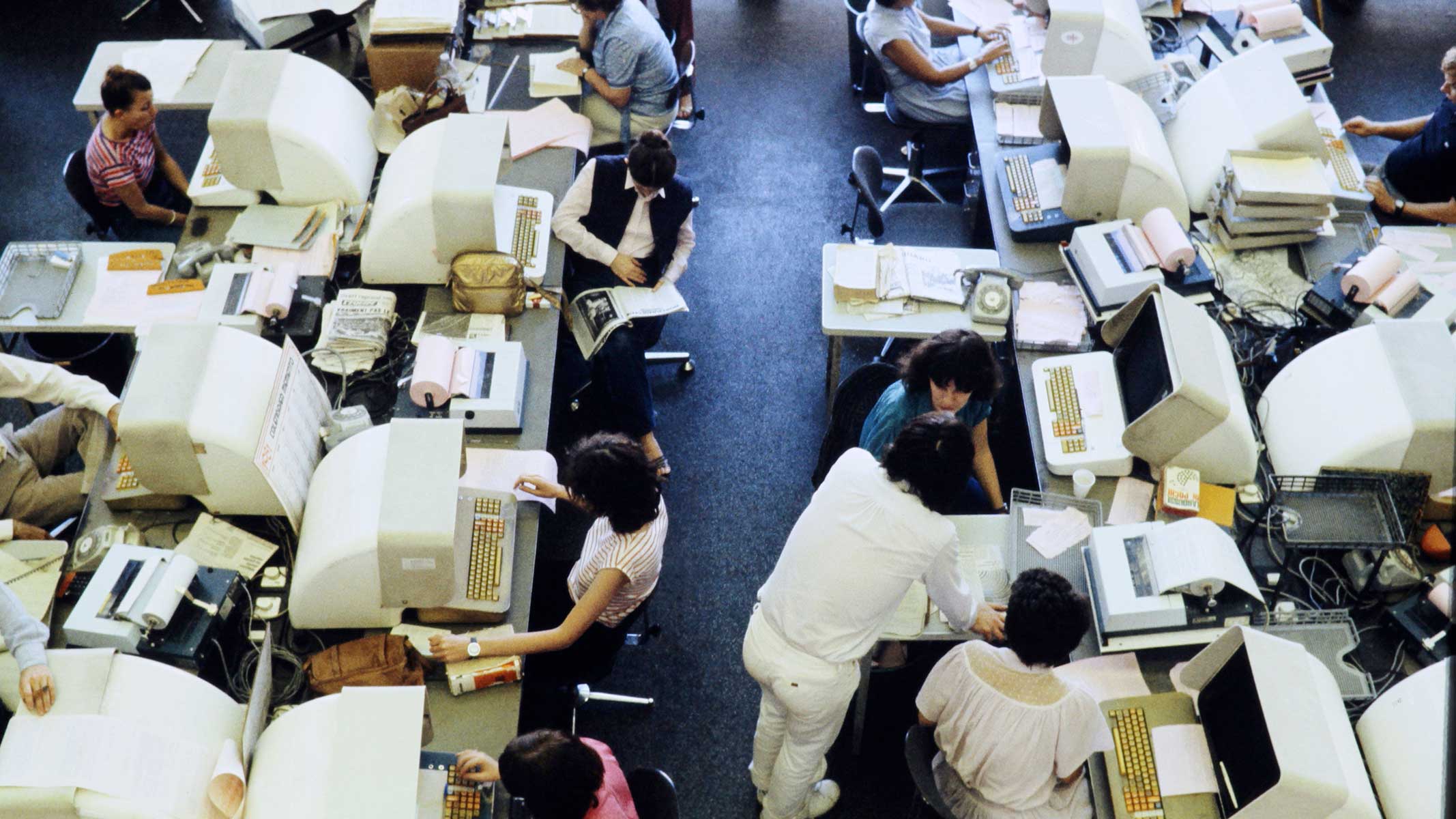
Three decades ago, the visionary social thinker Peter Huber published Orwell’s Revenge, a book that turned one of the twentieth century’s most haunting political parables on its head. Where George Orwell imagined a future of total information control, Huber saw the opposite: a world where digital technology shattered centralized authority. In 1984, the Ministry of Truth could rewrite history because it monopolized the tools of communication. But in the digital age, Huber argued, the networked computer would scatter those tools across society, producing an unruly democracy of voices. The Internet, he predicted, would not empower “Big Brother” but millions of “little brothers”—individuals able to report and argue and publish. What once seemed a one-way flow of information from elite institutions to a passive public was becoming a many-to-many conversation. The gatekeepers were being evicted by the code.
This technological revolution would have profound cultural consequences. As Huber memorably put it, “Better communicating machines produce more—not less—communication, more—not less—free expression, more—not less—political involvement, more—not less—freedom of thought.” The people who controlled legacy newsrooms—highly educated and overwhelmingly left-leaning—had long exercised a disproportionate power to define what counted as respectable opinion. When those gatekeepers lost influence, new kinds of voices surged through. In a book published in 2005, I described the early energies of this revolt, chronicling how talk radio, cable news, and the early Internet—all unleashed by the mutations in communications technology—disrupted liberal cultural authority. Right-of-center ideas and perspectives suddenly found much wider distribution.
Finally, a reason to check your email.
Sign up for our free newsletter today.
The fall of the old gatekeepers also demolished journalism’s economic foundations. The media theorist Andrey Mir calls this the rise of “post-journalism”—the era in which the traditional advertising model collapsed, taking with it the profession’s claim to disinterestedness. When Internet platforms absorbed ad revenue and fragmented audiences, news outlets, to survive—and many didn’t, with more than a third of newspapers disappearing since 2005—began seeking income directly from readers. Subscriptions and ideological loyalty replaced mass advertising. Journalism learned to sell not information but identity. News increasingly became a performance of belonging; in Mir’s phrase, the newsroom turned from a public square into a political theater.
Unsurprisingly, public confidence in legacy media has fallen to record lows. Just 28 percent of Americans say they trust newspapers, television, or radio to report fully and fairly. Among Republicans, the figure has plummeted to just 8 percent or so. Conservatives point to years of selective legacy press outrage and narrative discipline since Donald Trump decided to run for president: the phony Russia-gate investigations; the suppression of the Hunter Biden laptop story weeks before the 2020 election; the celebration of the “mostly peaceful” George Floyd riots; the authoritarianism of Covid-era public-health coverage; the pretense that President Biden was “sharp as a tack.” One can add countless other examples of elite outlets’ amplification of progressive ends, reinforced during the Biden presidency by a complicity among those outlets, social media firms, and administration officials to suppress and even de-platform controversial conservative voices—a failed effort to restore some kind of central command over the media cornucopia. The geography of journalism reinforced the political impression, with newsrooms clustered in a few coastal cities, steeped in the assumptions of their social class. The more those institutions declared themselves the guardians of “truth,” the more half the country concluded that “truth” was a partisan brand.
And yet the hunger for real reporting hasn’t vanished. People still want to know what happened—who did what, where, when, and why. Engagement with factual storytelling remains high. I can speak from our own experience at City Journal. Our reported pieces—Abigail Shrier writing about sexual trafficking, especially of minors, in California; Christopher Rufo’s whistleblower-based exposés on critical race theory and radical gender activism in academia and public schools; John Sailer describing the likely illegal methods universities are using to get around the constitutional ban on racial preferences in admissions; Heather Mac Donald’s relentless honesty about the realities of policing—have reached millions of readers and often had a significant impact on the public debate. I think this has to do with putting a face to the abstractions of policy choices, which makes them come alive, so that the stakes in human lives become clear. But it’s also about having the kind of journalists writing for us who have the receipts—by doing the hard work.
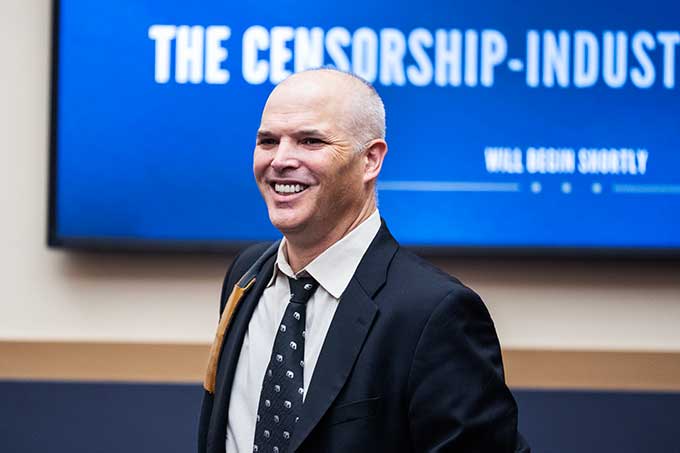
Contemporary audiences increasingly seek out individual voices they can believe. That search has produced a new ecosystem of journalist-entrepreneurs. Writers like Matt Taibbi have built large, loyal audiences outside traditional media, and we’ve seen the astonishing growth of the Free Press, which began as Bari Weiss’s newsletter before becoming a new-media juggernaut. Platforms like Substack and X allow writers to reach readers directly, often unmediated by legacy brands. Elon Musk’s reengineering of Twitter into X has supercharged this shift, transforming it into one of the most influential arenas for news and commentary in the world. But Substack is no slouch: it reported in 2024 that it had over 35 million monthly readers and 3 million paying subscribers, dramatic proof of the journalist-as-entrepreneur shift.
The new public sphere looks less like the New York Times, then, and more like a conversation or argument among countless independent or quasi-independent interpreters—some rigorous, some reckless or, worse, conspiratorial, but all accountable directly to their audiences. A recent Pew Research Center report found that more than half of American adults say they regularly get some news from social media, and almost 40 percent of young people regularly get their news from social media influencers. This is the realization of Huber’s prediction: a decentralized, often personality-driven media universe.
If I were to offer advice to aspiring journalists, it would be to keep these realities front of mind. Reporting can make an enormous difference, but you still need to get the stories—and there’s a lot of them to be told in areas that the legacy press, because of its progressive assumptions, has long ignored. And contemporary journalists should also think of themselves as entrepreneurs, even if they’re working for an institution. Those institutions, in turn, have to adapt to the reality of journalist-as-entrepreneur, as a brand.
And now, of course, a second technological wave is hitting. In a recent book, Newsmakers, a former R and D executive for the Wall Street Journal, Francesco Marconi, argues that artificial intelligence will transform journalism by automating part of its machinery of production. AI systems can already generate summaries, suggest sources, notice patterns in large data sets, and even detect emerging trends before humans do. Properly used, AI can liberate journalists from time-intensive but mentally unchallenging tasks to focus on interpretation, interviews, and shaping narratives. Most journalism content workflows will soon include some automated component, if they aren’t doing so already. This could introduce efficiencies that help news organizations remain financially viable, though AI-generated responses may capture a growing percentage of the search traffic that once flowed to their websites, posing a significant new challenge.
A third recommendation for aspiring journalists would be to become familiar with AI tools and use them to augment your powers—but never let it become a substitute for human insight and individual voice. Marconi warns that the future of journalism will depend on how skillfully humans preserve judgment, ethics, and curiosity in the flood of machine-generated content, a lot of it likely to be, in the new jargon, “slop.”
Legacy media, meantime, will keep trying to adjust. Some outlets will embrace the cult of influence, anchoring their brands around personalities who command trust in an age of skepticism. Others are experimenting with form—podcasts, newsletters, interactive data projects, digestible short content—and even reviving print as a mark of seriousness and permanence. The Atlantic’s shift to a monthly print schedule for the first time in decades, and Tablet’s launch of a physical magazine, suggest that scarcity and craftsmanship can once again signal value in the torrent of digital noise. It remains to be seen whether consumers of news truly want balance; the appointment of Bari Weiss as editor-in-chief of CBS News, with a stated goal of reducing bias, will be a compelling test of Mir’s post-journalism hypothesis. As old revenue models collapse, philanthropic dollars have also assumed a larger role in sustaining journalism, as with TFAS’s important fellowship programs for young reporters. The future of journalism may lie in a new and unstable synthesis: technologically fluent yet recognizably human, fast when needed but capable of depth, and drawing on subscription, commercial, and donor funding alike.
The story of modern journalism is thus a tale of constant transformation. The Internet freed speech but also brought cacophony; social media empowered individuals but eroded older institutions; AI promises efficiency but threatens originality. Yet the public’s need for reliable storytelling—the ancient hunger for the narrative that makes sense of the world—remains. The next phase of journalism, I believe, will belong to those who can reconcile abundance with authority, harness new technological tools without surrendering to them, and remember that the press, at its best, is devoted to uncovering reality itself.
Top Photo AFP via Getty Images
Source link