The Department of Defense has paused aid to Ukraine three times this year—at least once without permission from President Donald Trump.
Just days after the highly publicized spat in the Oval Office between Ukrainian President Volodymyr Zelensky and US President Donald Trump, American aid to the besieged European nation was paused by the Pentagon.
“The president has been clear that he is focused on peace. We need our partners to be committed to that goal as well. We are pausing and reviewing our aid to ensure that it is contributing to a solution,” a White House official said at the time. Following further dialogue between the United States and Ukraine, and additional (and more cordial) meetings between Zelensky and Trump, aid was resumed.
Months later, in early July, the aid was paused again—but this time not at Trump’s direction. In fact, when asked by a reporter in early July why the United States had halted military support and assistance, Trump denied that he had, and was caught off-guard when the Pentagon confirmed it.
Why Did Hegseth Act Without Telling Trump?
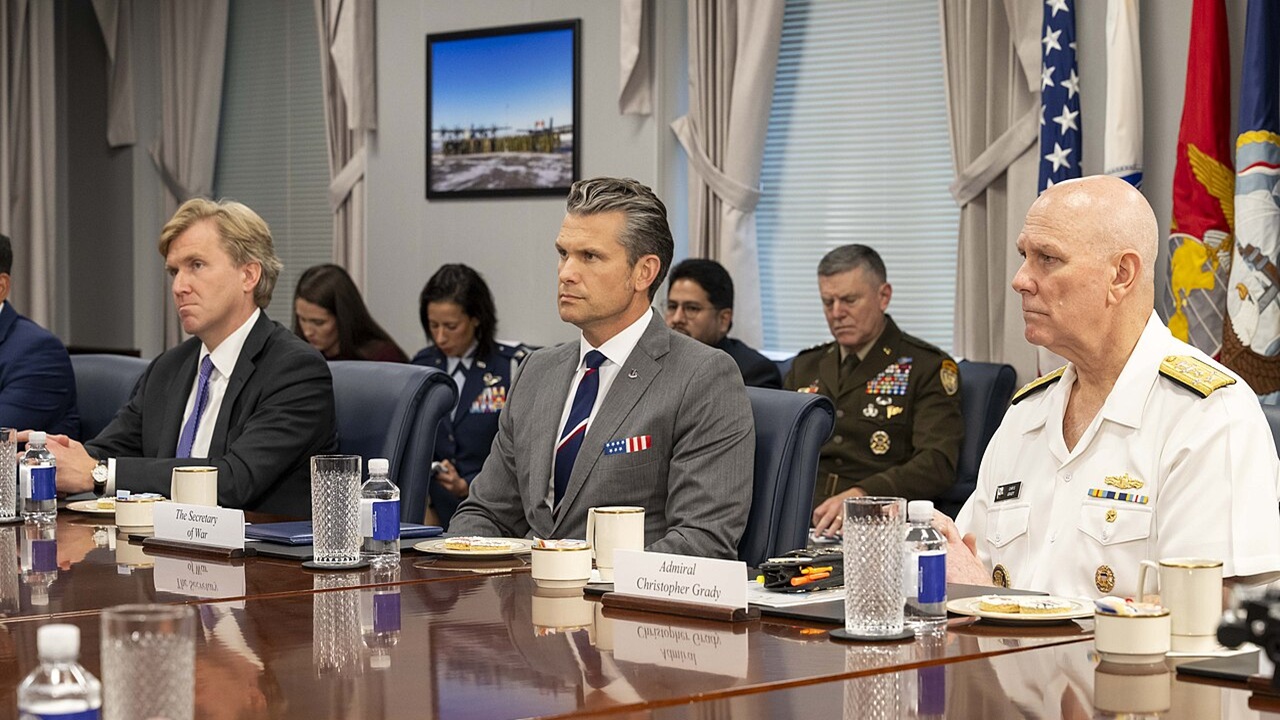
In the days that followed, it became clear that Secretary of Defense Pete Hegseth had not informed the White House before he directed the pause on weapons shipments. It was actually the third time the former Fox News weekend anchor turned Pentagon chief had decided to halt the flow of US aid to Kyiv.
“The episode underscores the often-haphazard policy-making process inside the Trump administration, particularly under Hegseth at the Defense Department,” CNN reported in July, citing unnamed sources within the Pentagon.
Over the summer, it was questioned whether this was a miscommunication.
The president had requested an assessment of US weapons stockpiles to ensure that US forces had sufficient supplies of ordnance and weapons if needed. However, at the time, it was reported that Trump had not ordered Hegseth to halt any shipments to Ukraine while the assessment was ongoing.
Independently, Hegseth decided to stop the flow. The Pentagon followed similar orders in February and again in May, when aid was also halted—only for the secretary’s actions to be reversed just days later.
According to NBC News, the pause impacted deliveries of dozens of Patriot interceptors, which Kyiv pledged for as they were needed to counter missiles that Russia has continually fired at Ukraine’s critical infrastructure. Other ordnance includes 155 mm artillery rounds, Hellfire missiles, precision-guided missiles, grenade launchers, Stinger surface-to-air missiles, and AIM air-to-air missiles. The latter are employed with the NATO-supplied F-16 Fighting Falcon provided to the Ukrainian Air Force last year.
Hegseth defended his order, stating that the stockpiles had run dangerously low, and the United States couldn’t spare the resources, even as production was ramped up for much of the ordnance during the Biden Administration.
The Pentagon’s Story Keeps Changing—and Congress Isn’t Happy
This week, Senate lawmakers on the Armed Services Committee were told of a slightly revised account of events during confirmation hearings for Alexander Velez-Green, who was nominated earlier this year to serve as senior advisor to Under Secretary of Defense for Policy Elbidge Colby.
“What I am aware of is that there were brief disruptions to delivery of weapons associated with the implementation of the capabilities review that Mr. Parnell was discussing at that time,” Velez-Green told the lawmakers, referencing Pentagon spokesperson Sean Parnell.
Another individual, Austin Dahmer, who is currently handling the duties for the position Velez-Green is nominated for, stated, “I’m not aware of any pause in that aid,” and he added, “There’s been some I’m aware of, a lot of inaccurate reporting in the public on this, but I’m not aware of any pause.”
Lawmakers on both sides of the aisle have expressed frustration with the handling of the pause, the lack of transparency, and the Department of Defense’s (DoD) failure to notify Congress, including the state of US weapons stockpiles.
“Do you agree that meaningfully engaging with Congress is necessary for the department to ultimately receive the authorities and the funding that are needed to implement ‘peace through strength’?” Sen. Deb Fischer, R-Neb., asked Velez-Green. “If we do have areas of disagreement —for example, how best to support our allies, our partners—would you agree that a healthy discussion with members of this committee would still be valuable?”
Velez-Green confirmed he would do better in communicating with lawmakers on such issues.
However, none of Velez-Green’s answers helped to explain the pauses directed by Hegseth.
Europe’s Defense “Pathetic,” Hegseth Says
The most straightforward answer to why Hegseth ordered the pause to Ukrainian aid on three occasions likely comes down to his view of Europe. In a now-infamous March 2025 leaked group chat, Hegseth suggested that Europe was “pathetic” and was “freeloading” on US defense commitments.
The former Fox News host has long argued that Europe has relied too heavily on US military support and that European nations—notably those in NATO—should take on more of the defense responsibility.
Hegseth has stated that the United States should also focus on its own borders and on deterring China, rather than supporting Ukraine.
What Hegseth, who has also directed that the United States military return to a “warrior ethos,” may not understand is that the US will need partners and allies. As the Department of Defense has turned inward, China has moved closer to Russia, as have Iran and North Korea. Oceans won’t protect the United States as they once did—a fact that the Pentagon must remember.
About the Author: Peter Suciu
Peter Suciu has contributed over 3,200 published pieces to more than four dozen magazines and websites over a 30-year career in journalism. He regularly writes about military hardware, firearms history, cybersecurity, politics, and international affairs. Peter is also a contributing writer for Forbes and Clearance Jobs. He is based in Michigan. You can follow him on Twitter: @PeterSuciu. You can email the author: [email protected].
Image: Wikimedia Commons.