One of the biggest legal and political battles in Washington, D.C., today concerns whether the president must spend money that Congress has appropriated. Russ Vought, head of President Trump’s Office of Management and Budget, claims that congressional appropriation laws provide a spending ceiling, which the executive can undershoot if he cannot find a good use for the money. Trump foes say that he must spend all appropriated funds, and they have even sued to try to force money out the door.
While Congress holds ultimate power of the purse, and some types of spending are mandatory, the president has the discretion to decide when certain appropriations are not needed. Every president has used this authority. Lawmakers can and should give the executive more explicit power to withhold funds when he can accomplish a congressional goal more cheaply.
Finally, a reason to check your email.
Sign up for our free newsletter today.
The Constitution is typically laconic on spending powers. It says: “No Money shall be drawn from the Treasury, but in Consequence of Appropriations made by Law.” The Founders worried more about a president spending money without congressional say-so than one withholding largesse. Everyone understood the logic when, in 1803, President Thomas Jefferson refused to spend $50,000 appropriated to provide gunboats for the Mississippi, since the Louisiana Purchase made them unnecessary.
The Supreme Court has acknowledged the president’s “traditional authority to decline to spend appropriated funds.” In 1942, President Franklin Roosevelt wrote that “the mere fact that Congress, by the appropriation process, has made available specified sums for the various programs and functions of the Government is not a mandate that such funds must be fully expended. Such a premise would take from the Chief Executive every incentive for good management and the practice of commonsense economy.”
In 1974, however, after President Richard Nixon took aggressive action to limit spending, Congress passed the Impoundment Control Act, which required the president to seek congressional approval to withhold funds. Congress still grasped that circumstances sometimes make spending the money impossible. Under the law, the president is allowed a “programmatic delay” in dispensing the money if viable projects are not available or the spending would be wasted. If the delay goes on past the time Congress provided, the appropriations get canceled and returned to the Treasury.
Advocates of forced spending underestimate how often the government, for sensible reasons, does not or cannot spend the available funds. By one estimate, almost $25 billion in appropriated funds—about 1.5 percent of the discretionary budget—get returned to the Treasury yearly. The Government Accountability Office estimated that the Pentagon alone returned more than $80 billion to the Treasury over six years because it could not find good uses for the money within the projects that Congress designated.
The president often struggles to spend funds in a timely manner, even when Congress gives him years to do so. Typically, more than $1 trillion in unused funds carry over into the next fiscal year. The Biden administration famously had trouble spending money on its big programs. It received tens of billions of dollars from Congress to connect rural communities to the Internet, but it had not made a single web connection by the time Biden left office.
Congressional appropriation acts seem to offer the president significant spending discretion. The typical language in an appropriation act says that, to use an example from last year, “$1,750,000 shall be available until September 30, 2025, for expenses necessary in carrying out related responsibilities of the Secretary of Interior.” The money is made “available”—not required.
There are real costs to federal agencies spending money just to meet congressional deadlines. One of the worst-kept secrets in Washington is the “use-it-or-lose-it” mentality that afflicts agencies in September, the last month of the fiscal year, after which most appropriations get canceled. Spending on contracts in the last week of September is about five times higher than in other weeks of the year. Research shows that contracts from that period tend to perform worse than others.
Despite critics’ grumbling about Trump’s use of executive power to limit spending, Democrats were unconcerned when Biden used executive power to increase spending—vastly. By one measure, President Biden through his executive actions added up to $1.4 trillion to the deficit. He issued a rule expanding Medicaid spending by $135 billion and other rules expanding food-stamp spending by almost $200 billion. The Trump limitations on spending, by contrast, have generally saved a few billion dollars.
Whether all, or just some, of Trump’s spending decisions are lawful under the Impoundment Control Act and whether the act itself is unconstitutional remain open questions for the courts to decide. But both parties and the press should acknowledge that the current situation—in which attempts to boost spending by executive action get green-lighted, while efforts to reduce spending get lawsuits and injunctions—is the opposite of what the Founders intended. The purpose of public spending is not merely to reward friends and allies but to accomplish objectives for the American people. If a president can achieve a congressional goal by spending less money, he should do so—and Congress should allow and celebrate that action.
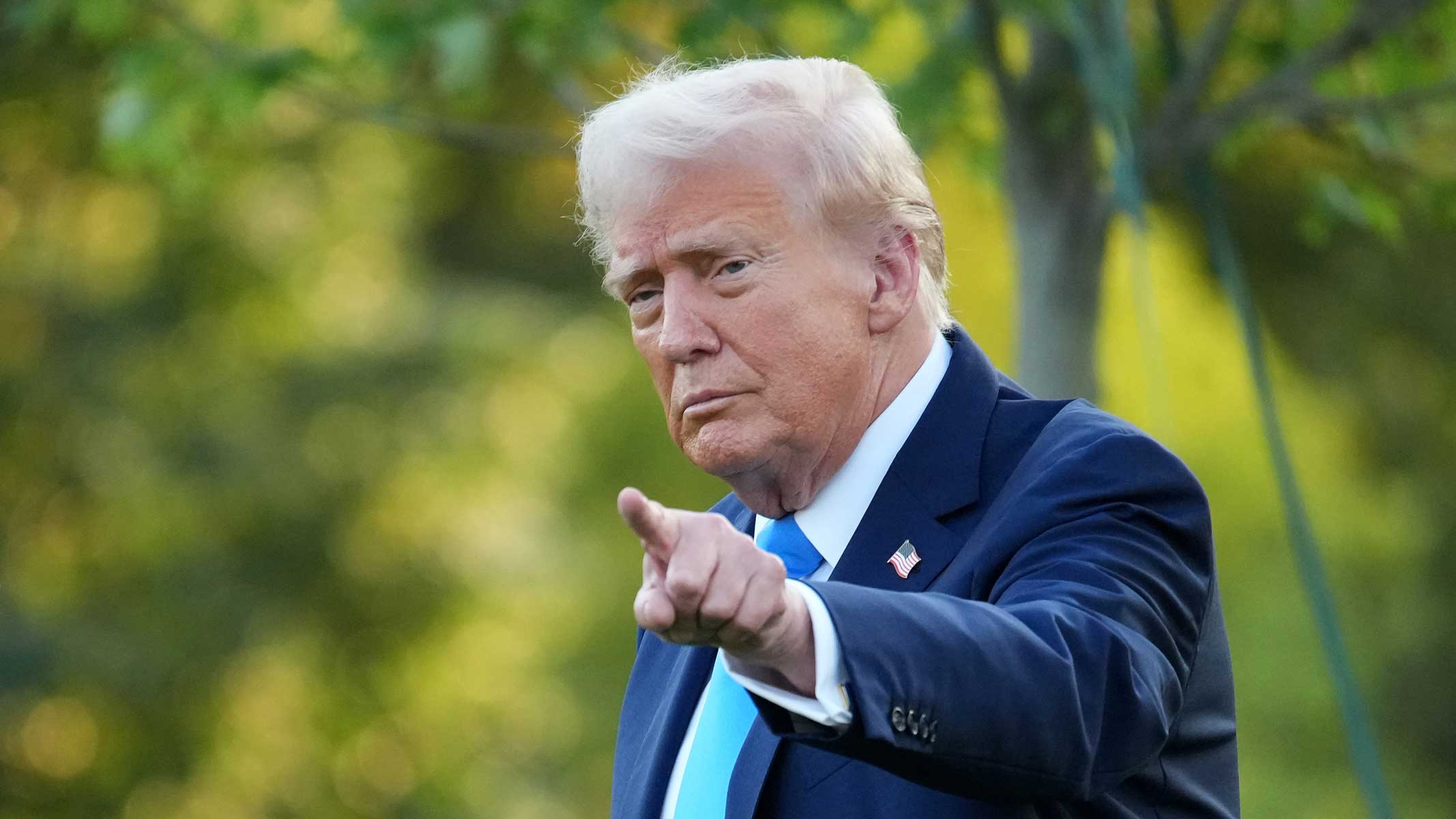
Photo by Andrew Harnik/Getty Images
City Journal is a publication of the Manhattan Institute for Policy Research (MI), a leading free-market think tank. Are you interested in supporting the magazine? As a 501(c)(3) nonprofit, donations in support of MI and City Journal are fully tax-deductible as provided by law (EIN #13-2912529).
Source link