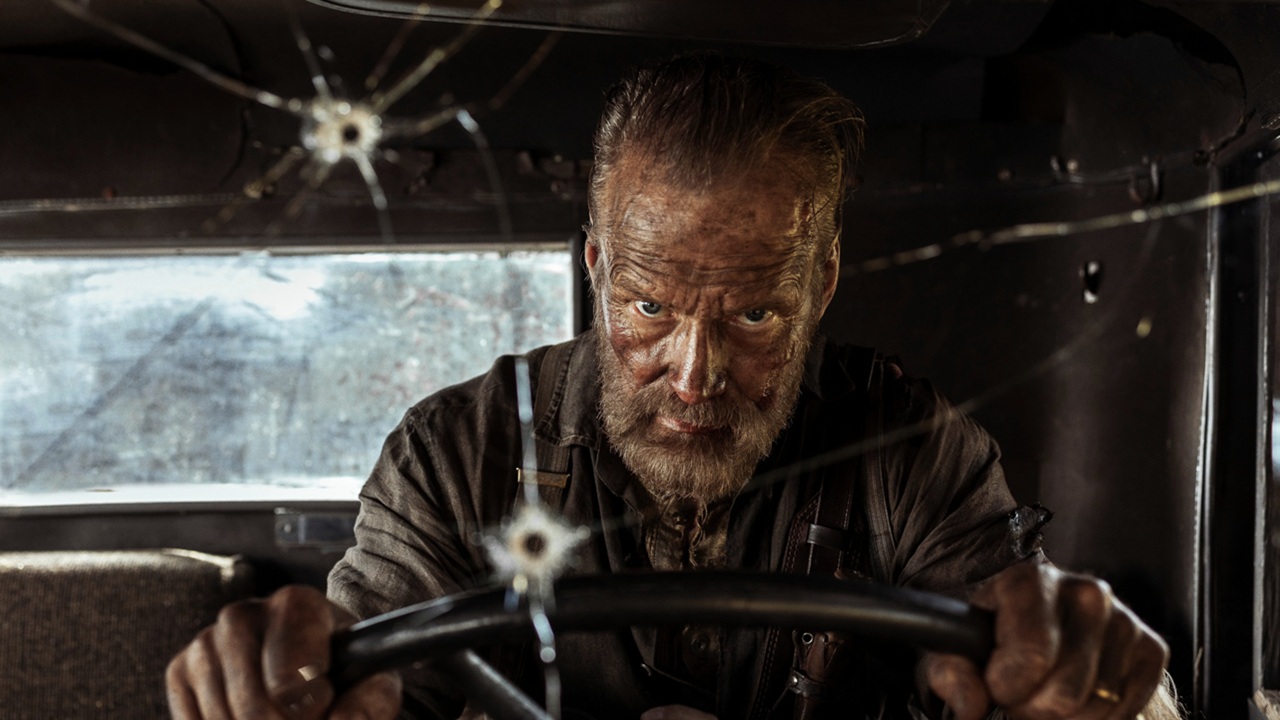
Aatami Korpi, the hero of the upcoming film “Sisu: Road to Revenge,” fights against both Nazi Germany and the Soviet Union—mirroring Finland’s complicated World War II history.
During the Cold War, the Soviet Union was often portrayed as the “enemy” in Western pop culture. James Bond fought the Soviets directly on many occasions, and like Rambo, even helped the Mujahideen in Afghanistan. Rocky fought Ivan Drago in the boxing ring on Christmas Day, Clint Eastwood stole the fictional MiG-31 “Firefox,” and teenagers (including a 31-year-old Patrick Swayze) took on the Soviet Army in Red Dawn.
Following the dissolution of the Soviet Union, the Red Army was no longer seen as the enemy. The 2001 film Enemy at the Gates even presented the Soviets in a largely positive light (albeit with British accents), and suggested that sniper Vasily Zaitsev was a true hero.
Following Russia’s seizure of Crimea in 2014 and its invasion of Ukraine in 2022, Russia’s reputation in the West has once again plunged. The Soviet Union’s Red Army is now the enemy again—notably in the upcoming Finnish-made action film Sisu: Road to Revenge, the sequel to the highly popular Sisu. Produced before the invasion of Ukraine, the first film was essentially a take on the American film First Blood, where a former Finnish soldier, Aatami Korpi (played by Jorma Tommila), carries out a personal war against a German Waffen SS platoon after the unit tries to rob and murder him.
Sisu became a cult favorite, being compared to John Wick and Inglourious Basterds, which has led to the announcement of a sequel. The first film had Korpi, “the man who refuses to die,” fight the Nazis. This time around, he’s fighting members of the Red Army—mirroring Finland’s own complicated history during World War II.
Finland Fought Three Separate Wars During World War II
Korpi’s one-man war with the Soviets is meant to be personal, but Finland’s own history with Russia could also describe why the filmmakers chose to portray the Soviets as the villains.
Finland was one of those places that could be fairly described as a land populated by people without their own country. From the 13th century to 1809, Finland was part of the Kingdom of Sweden. It was then ceded to Russia as an autonomous Grand Duchy within the Russian Empire—a status it maintained until 1917, when it declared independence. By the late 1930s, a great deal of mistrust had developed between the two countries.
Although the Soviet Union had recognized Finland’s independence, in the fall of 1939, it demanded territory under the pretext of creating a buffer near the city of Leningrad (St. Petersburg), as it was located just 20 miles from the Finnish border.
Helsinki rejected Moscow’s demands, and the Red Army launched an invasion on November 30, 1939, sparking the Winter War. Winter had previously served on Mother Russia’s side in past wars, and the Kremlin apparently thought it would once again.
It didn’t.
The Finnish Army proved highly resilient, well-led, and was fighting on familiar territory. The Red Army suffered through three months of heavy fighting. Estimates suggest that the 127,000 Soviets were killed or missing, and another 265,000 were wounded. By comparison, 25,000 Finns were dead or missing and 44,000 wounded. It hardly helped the Soviet cause that the war came only two years after Soviet leader Joseph Stalin’s mass purge of the Red Army’s officer corps—ensuring that the force that remained was extremely loyal, but disastrously incompetent. In March 1940, Finland agreed to the USSR’s territorial demands, granting the buffer zone near Leningrad but retaining its independence.
A year and a half later—encouraged in large part by the Red Army’s catastrophic performance against Finland—Nazi Germany launched its invasion of the Soviet Union. Finland joined the Germans in an effort to regain its lost territory. During the Continuation War, fought from 1941 to 1944, the Finnish military achieved early successes and then advanced into Soviet Karelia, stopping at the Svir River, which Helsinki may have considered a natural border.
There was a period of stable frontlines, characterized by trench lines reminiscent of World War I. However, in June 1944, the Soviet Red Army pushed back the Finnish Army, and Helsinki sued for peace. As part of the armistice with the Allied powers, Finland agreed to expel German forces from its territory. That resulted in a conflict with its former ally, but the Lapland War ended in a Finnish victory.
Throughout the Cold War, Finland maintained a stance of neutrality, but vigorously opposed the invasion of Ukraine in 2022 and joined NATO in response the following year. Helsinki recently hosted the “Southern Griffin 25” military exercises, involving 1,600 special operations forces from nine NATO member nations.
Simo Häyhä: The Real “Finn Who Wouldn’t Die”
In addition to being inspired a bit by Rambo, the fictional Korpi was partially based on Finnish sniper Simo Häyhä—who didn’t just shoot Soviet Red Army soldiers, but tracked and hunted them.
Häyhä earned the nickname “White Death” due to the white uniform camouflage he wore while stalking enemy soldiers. In addition to sniping at the enemy with his M/28-30 bolt-action rifle, the Finnish variant of the Russian Mosin-Nagant, he took part in assaults with a Suomi KP/-31 submachine gun, reportedly killing upwards of 500 enemy soldiers.
In the final week of the war, Häyhä was severely wounded by an explosive bullet that struck his face and destroyed his lower jaw. He managed to survive his wounds—and returned home to read reports of his death in the local newspaper!
Häyhä had requested to return to combat during the Continuation War, but due to his facial injuries, the request was denied—doubtless saving many Soviet lives. Häyhä lived until 2002, finally dying at the age of 96.
About the Author: Peter Suciu
Peter Suciu has contributed over 3,200 published pieces to more than four dozen magazines and websites over a 30-year career in journalism. He regularly writes about military hardware, firearms history, cybersecurity, politics, and international affairs. Peter is also a contributing writer for Forbes and Clearance Jobs. He is based in Michigan. You can follow him on Twitter: @PeterSuciu. You can email the author: [email protected].
Image courtesy of Sony Pictures.