Each year, between July and November, the Catholic Church remembers the Martyrs of the Spanish Civil War. This heroic company of martyrs includes bishops like Blessed Florentino Asensio Barroso, who was tortured and mutilated for weeks before he was killed, and entire seminaries like the Claretian Martyrs of Barbastro, who were offered freedom multiple times if they would simply renounce their Faith. They refused, and instead went to the firing squad, forgiving their executioners and crying out, “Viva Cristo Rey!”
There are also humble sisters in this group, like Blessed Maria de los Angeles Ginard Martí, who went with the militiamen who came for her with the utmost courage and tranquility.
The Martyrs of the Spanish Civil War also included laypeople from all over Spain who gave their lives for the Faith, like Juan Bautista Pellón Medina, the cousin of a friend of mine. Pellón Medina was a twenty-four-year-old agricultural engineering student who had a strong devotion to Our Lady and was a member of Catholic Action and the Society of St. Vincent De Paul. On October 1, 1936, he was arrested, imprisoned for a month, and then killed with 2,000 other political prisoners at Paracuellos de Jarama, twenty miles outside of Madrid.
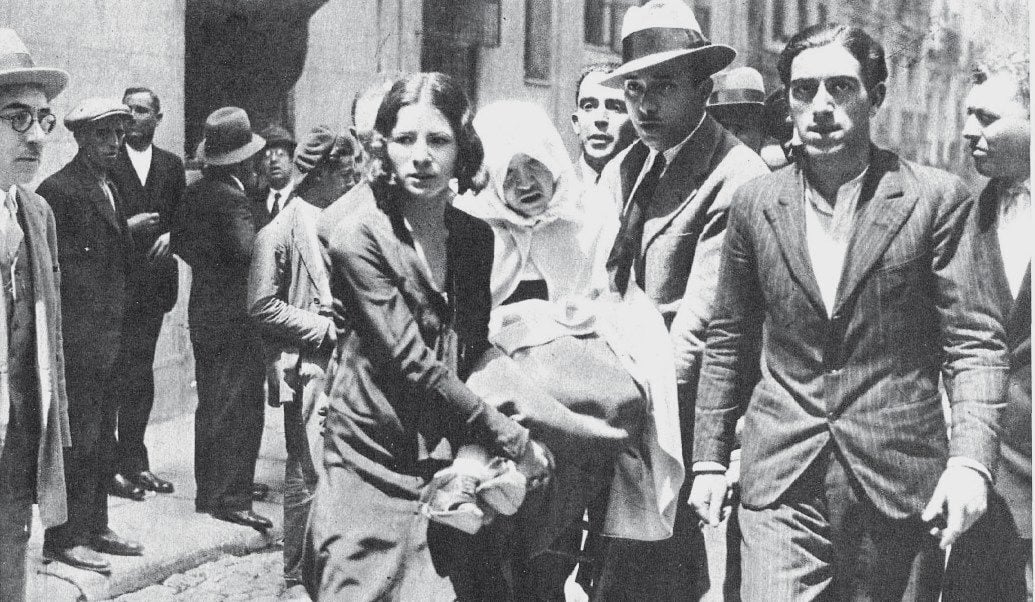
For years leading up to the Spanish Civil War, the millions of lay Catholics in Spain lived in a climate that was tremendously hostile to their beliefs, and yet they persevered in the Faith. Throughout those troubled years, everyday laypeople did truly heroic things. They hid priests and religious in their homes when their lives were in danger, safeguarded the Blessed Sacrament from anarchist mobs who planned to desecrate it, and rescued nuns from burning convent buildings (see article image above).
I’ve been fascinated by the Martyrs of the Spanish Civil War ever since my father first told me stories about them, but their courage and sacrifice impacted me even more when I came to understand the political environment they lived in during the years before the war began.
The violent anti-Catholic persecution that reached a climax in the summer and fall of 1936 began years earlier, and it was part of a process of radicalization that took place under the government of the Second Spanish Republic. Between 1931-1936, approximately 2,400 people were killed due to political and anti-clerical violence. The priests, religious, and laypeople who were eventually martyred in the Spanish Civil War knew what was coming, and yet they did not leave Spain.
The Day of the Convent Burnings
The Second Spanish Republic was proclaimed in April of 1931, as King Felipe XIII left for France in exile. Even though the Republican leaders called the new government a democracy, most of them never intended to give Catholics and the Church equal civil protection under the law. In fact, the new government’s tolerance of violence toward priests, religious, and Church property began less than a month into the new regime.
On May 10, rioting broke out in Madrid because the monarchist anthem was played out the window of a monarchist club on Calle de Alcalá. Rioting began and mobs set fire to more than half a dozen convents all over the city. The violence spread to other cities over the next few days, and more than one hundred churches, schools, and other buildings were burned down and priceless libraries and works of art were destroyed. When Miguel Maura, the Minister of the Interior, asked Manuel Azaña, the Minister of War, to send out the Guardia Civil, Azaña refused, saying, “All the convents in Spain are not worth the life of one Republican.”
Lay Catholics did not wait around for the government to send out the Guardia Civil. They took it upon themselves to defend the convents and churches that were being set on fire—after all, these were the places where they had been baptized, made their first Communion, and where they attended Mass each Sunday. During this time Juan Bautista Pellón Medina stood guard outside of the Basilica of the Conception of Our Lady on Calle Goya, along with other members of the St. Vincent De Paul Society. There were also people who ran into burning buildings to rescue sisters who were trapped inside, saving their lives.
The Asturian Revolution of 1934
Three years later, in October of 1934, a wave of revolutionary strikes took place across Spain. Seen by many historians as a prelude to civil war, these strikes were not for workers’ rights, but a revolt against the Republic and an attempt to take control. The strikes were put down easily in other parts of Spain, but not in Asturias, where the revolutionary groups were more unified. Armed with guns and dynamite, Asturian miners proclaimed a proletarian revolution, killing local leaders and taking power.
Fifty-eight churches were burned, and thirty-five priests and religious were killed, including a group of eight De La Salle brothers and one Passionist brother, who are known collectively as the Martyrs of Turón. The Martyrs of Turón were canonized in 1999 by St. John Paul II and are regarded as Martyrs of the Spanish Civil War, even though they were killed two years before the war began.
Civil War
Between 1934-1936, political tensions escalated, especially after the highly contested fraudulent elections that took place in February of 1936. After months of rising violence, on July 13, 1936, the leader of the opposition party, José Calvo Sotelo, was assassinated by a group of men that included the government’s own police. In response, the government imposed censorship to conceal the truth of what had happened and did nothing to apprehend the men responsible. Six days later, a group of general Francisco Franco rebelled against the Republic. Two days afterward, on July 19, the government cabinet, led by newly elected prime minister José Giral, decided to arm the militias. This would prove to be the end of parliamentary politics under the Second Spanish Republic.
Now armed, the militias began rounding up priests, religious, and lay people who had monarchist or conservative sympathies, or who showed any signs of their Catholic Faith. Priests and religious, like Blessed Maria de los Angeles Ginard Martí, had to dress in civilian clothes and go into hiding because the militias attacked churches and convents, imprisoning anyone left behind and destroying everything. Tragically, in the months after the outbreak of civil war, more than 7,000 priests and religious were killed out of hatred for the Faith. According to Hugh Thomas, the prominent historian of the Spanish Civil War, “At no time in the history of Europe or even perhaps the world has so passionate a hatred of religion and all its works been shown.”
The bravery and heroism of the Martyrs of the Spanish Civil War can be best understood within the broader context of the progression of anti-Catholic government policies that began under the Second Spanish Republic. The martyrs, along with countless Catholics living in Spain, lived through intensifying phases of persecution and frequent violations of their civil liberties.
It is my hope that Pope Leo XIV will canonize many of the Martyrs of the Spanish Civil War who were beatified by his predecessors. When their stories become better known, I have no doubt that their fearless witness during this dark time in Spanish history will inspire the faithful to face the challenges of our own day with renewed courage and devotion.
Photo by Luis Ramón Marín on Memoria de Madrid, originally printed in the Nuevo Mundo newspaper on May 15, 1931. “Eviction of nuns during the fire at the Jesuits’ Profession House on Gran Vía.”