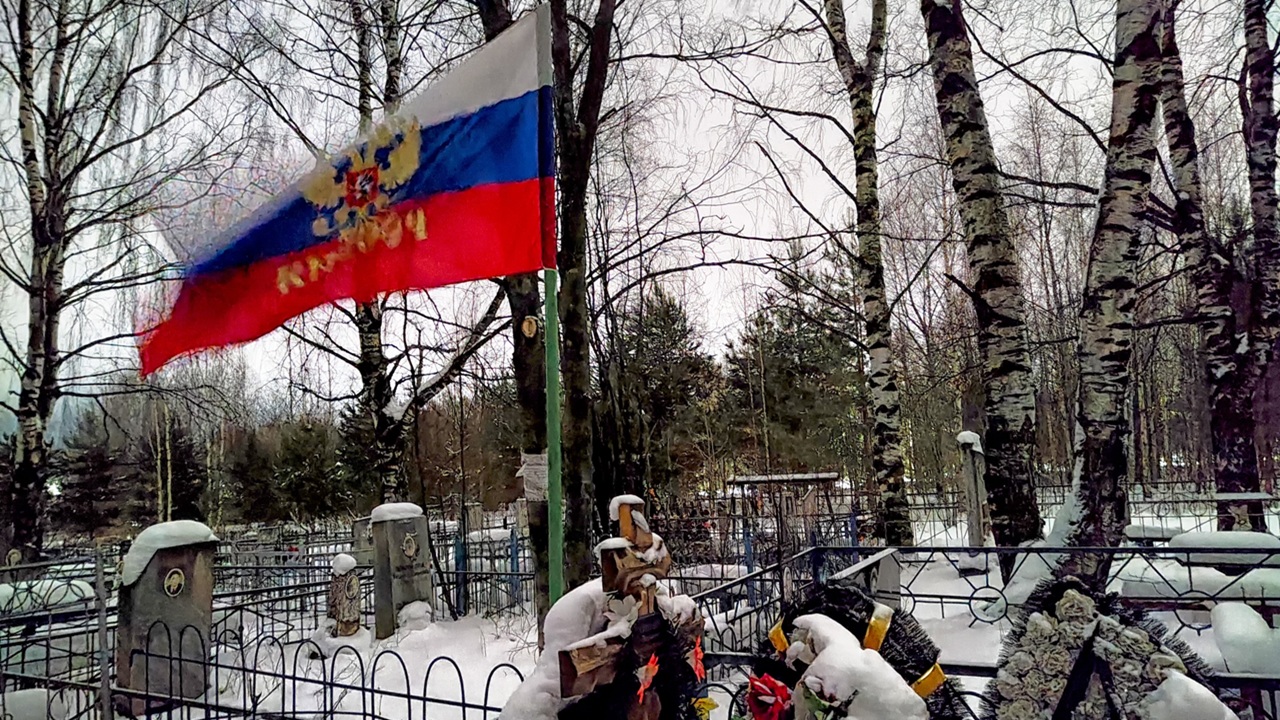
An estimated 415,000 Russian soldiers were killed or wounded on the battlefields of Ukraine in 2025. Astonishingly, this was not the deadliest year of the conflict.
Last year was the second-deadliest year for the Russian military in Ukraine. Russian forces suffered approximately 415,000 casualties in 2025—with very little to show for it on the battlefield.
Estimating Russia’s Casualties in 2025
Last year proved to be catastrophic in terms of casualties for the Russian forces. In 2025, the Russian military, paramilitary units, and pro-Russian separatist forces sustained approximately 415,000 casualties killed and wounded. This is a slight decrease from 2024, the deadliest year of the conflict, when Russian forces sustained approximately 430,000 casualties.
In other words, in the last two years of fighting, the Russian armed forces have lost nearly 900,000 troops—a force almost five times the size of the Kremlin’s total initial invasion force. Most estimates suggest that Russian forces have lost over 1.2 million troops since the initial invasion of Ukraine in February 2022.
December 2025 was particularly deadly for the Russian forces. According to data provided by the Ukrainian General Staff, the Russian forces took an average of 1,130 casualties in the last month of the year. This was a slight increase from November, in which the average daily casualty figures were 1,030 troops killed or wounded. The latest NATO estimates assess that the Russian forces are losing around 20,000 to 25,000 troops per month.
“Russia’s monthly casualty rate has risen again in conjunction with increasing advances across the frontline,” the British Ministry of Defence assessed in a recent intelligence estimate.
Although these daily average losses appear high—and they are—they are far from the deadliest months of the war. Indeed, there have been months in the conflict where the Russian forces have lost in the range of 1,500 to 1,600 troops every single day—typically during the intense battles for towns in eastern Ukraine such as Bakhmut and Avdiivka in 2023 and 2024.
Russia’s Attritional Strategy Has a High Human Cost
Ongoing data collection also suggests that Russian casualties are not going to decrease in 2026. The Russian military continues to be on the offensive across several places in the contact line.
“Russia will highly likely continue to experience high casualty rates over January 2026 with continued dismounted infantry attacks on multiple axes,” the British Ministry of Defence concluded in its latest intelligence assessment.
Throughout the “special military operation” in Ukraine, the Russian leadership has pursued a high attrition strategy. To be sure, the Kremlin did not start the war with the intent of just throwing soldiers into the meatgrinder. The initial strategy relied on surprise and speed—a “shock and awe” campaign akin to those conducted by the US military in its recent wars.
In the first days of the war, the Russian forces made significant progress across several different axes of advance. For example, the northern forces reached the outskirts of Kyiv before Ukrainian artillery and Western-provided anti-tank missiles stopped the Russian advance. And in the east, the Russian forces almost surrounded Kharkiv, Ukraine’s second-largest urban center.
By the winter of 2022, however, the Russian military had lost much of the captured territory after two successful large-scale Ukrainian counterattacks. The war then gradually settled into a slower pace as the contact line hardened and the Ukrainians assumed a defensive posture. That type of war is characterized by little movement and extremely high casualties. Given its advantage in manpower, the Kremlin shifted its strategy and relied on its superior reserves to dent the Ukrainian defenses and advance.
Still, while the Kremlin might find the current approach effective, the truth is that the Russian forces have lost over 1 million troops for limited territorial gains.
About the Author: Stavros Atlamazoglou
Stavros Atlamazoglou is a seasoned defense journalist specializing in special operations and a Hellenic Army veteran (national service with the 575th Marine Battalion and Army HQ). He holds a BA from the Johns Hopkins University and an MA from the Johns Hopkins’ School of Advanced International Studies (SAIS). His work has been featured in Business Insider, Sandboxx, and SOFREP.
Image: Shutterstock / KELENY.