Amid Haiti’s ongoing political chaos and economic collapse, Christians continue to cling to faith and hope as general elections approach, a missionary priest says.
On March 12, 2025, Papua New Guinea’s Parliament passed a constitutional amendment by an 80-4 vote formally declaring the country a Christian nation. Led by Prime Minister James Marape, the amendment revised the constitution’s preamble to explicitly acknowledge the Trinity and recognize the Bible as a national symbol.
The updated text states: “We acknowledge and declare God, the Father; Jesus Christ, the Son; and Holy Spirit, as our Creator and Sustainer of the entire universe and the source of our powers and authorities, delegated to the people and all persons within the geographical jurisdiction of Papua New Guinea.”
One year later, Catholic bishops say the amendment has so far had little practical effect on Church life, while raising longer-term questions about religious freedom and Church-state relations.
Limited practical impact so far
Bishop Donald F. Lippert, OFM Cap, of the Diocese of Mendi told EWTN News that the Catholic Church continues its core mission regardless of constitutional language, focusing on “making our people and hence the country more ‘Christian’” through pastoral ministry and its extensive work in education, health care, and social services.
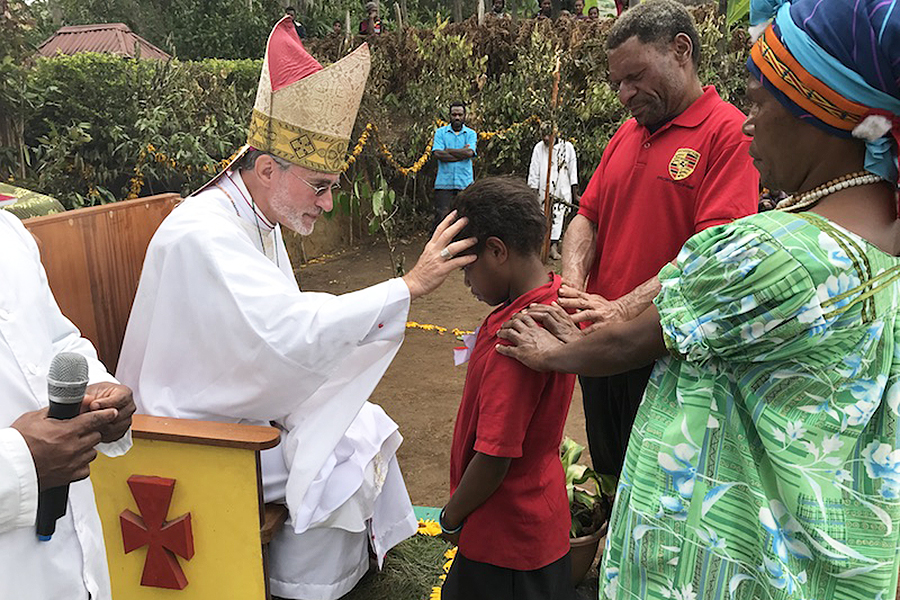
The Pittsburgh-born bishop said concerns raised at the time of the amendment’s passage sparked debate within Papua New Guinea’s Christian communities about whether the change was necessary, given that the constitution already referenced Christian principles. Some also expressed concern that the amendment could, over time, allow the state to take a more active role in religious affairs or complicate protections for religious liberty.
So far, Lippert said, he has not observed concrete changes affecting parish life in his diocese. He suggested the amendment has functioned more as a symbolic affirmation than as a practical guide for governance.
He also said the Church must continue engaging public authorities prudently while maintaining its prophetic voice on pressing social issues, including violence linked to sorcery accusations, tribal conflict, and child protection.
Questions over alignment between constitutional change and public policy
Since taking office in 2019, Marape has framed his leadership around the vision of “Taking Back PNG: Making PNG the Richest Black Christian Nation in the World.”
Yet observers say recent government actions sit uneasily alongside that pledge. They point to the removal of blanket tax exemptions for churches, a move widely seen as an effort to expand state revenue by taxing religious institutions, highlighting that government priorities can be shaped more by fiscal and political concerns than by constitutional religious language.
The ambition to become the “richest” nation appears to take precedence over the commitment to remain a “Christian” one, with fiscal policy treating churches less as partners in nation building and more as a taxable base, despite their central role in providing education, health care, and social services across the country.
Additionally, some have expressed concern that leadership positions across the legislature, executive, and judiciary, as well as within the national public service, are disproportionately held by members of the Seventh-day Adventist faith, raising questions about denominational balance and the perception of neutrality in public institutions, particularly in the context of the 2025 constitutional amendment.
Catholic leaders warn of long-term risks to religious freedom
Bishop Rozario Menezes, SMM, of the Diocese of Lae told EWTN News the Catholic Church opposed the amendment not because it rejects Papua New Guinea’s Christian identity but because it judged the change “unnecessary and problematic.”
He explained that the Church has “always proclaimed Christ and served the spiritual and social development of our country since before independence” and argued that the constitution already provided “a strong moral and Christian foundation.”
“There was no constitutional vacuum that required such an amendment,” he said.
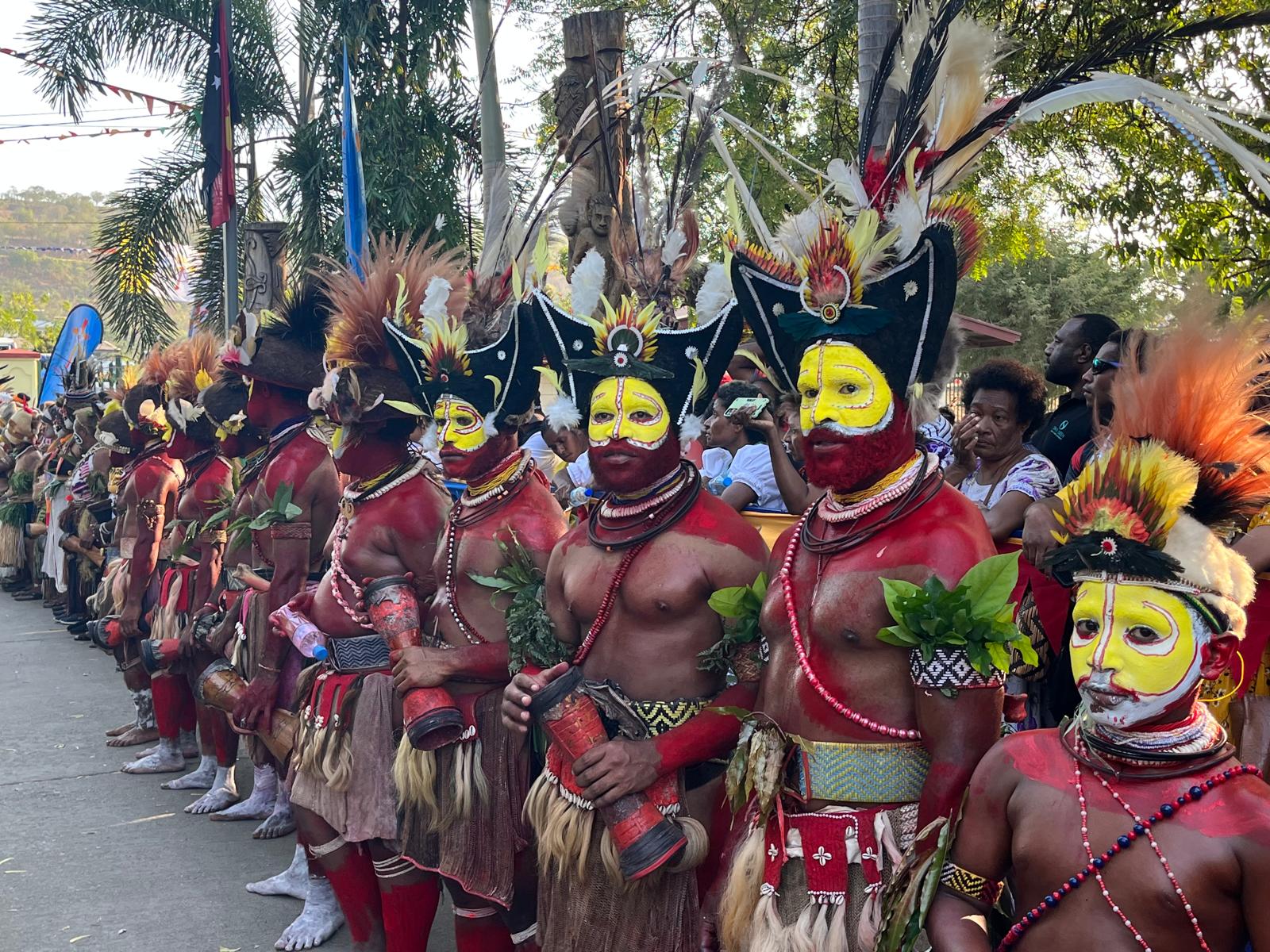
Menezes warned that the amendment could create long-term risks even if it has not yet produced visible disruptions. He said it could “risk contradicting the rights and freedoms enshrined in the constitution,” including “freedom of conscience, thought, religion, and assembly,” and could allow future governments to “enact laws or regulations that may adversely affect minority faith communities or citizens of no religious affiliation.”
While noting that “at present, there has not been significant visible disruption to the practices of different faith communities,” he said concerns remain that future governments could “by decree or regulation, interfere in religious practice,” particularly if religious life becomes subject to political interpretation.
Concerns over Church-state balance and institutional autonomy
Menezes also pointed to earlier state actions that, in his view, demonstrate how religious symbolism can become entangled with politics. These include the installation of the King James Version Bible in Parliament, which he noted “is not a Catholic translation,” and what he described as a “legally and theologically problematic” covenant language behind a 2017 National Day of Repentance government campaign.
He said the amendment appears to have been promoted by pastors linked to a Protestant movement known as the Body of Christ, which the Catholic Church is not part of. At the same time, he said the government remains aware of the Catholic Church’s significant contributions in education, health care, and public life, and engagement between Church and state remains cautious and measured.
Although no overt restrictions have emerged, Menezes conveyed that Church leaders are watching for subtler institutional effects. He pointed to cases in which appointments of teachers and principals to Catholic agency schools occurred “without meaningful consultation,” raising broader questions about “partnership, respect, and justice” in Church-state relations.
Such developments, he suggested, test the practical health of Church-state relations in a country that has historically maintained social harmony through mutual respect rather than coercion.
If you value the news and views Catholic World Report provides, please consider donating to support our efforts. Your contribution will help us continue to make CWR available to all readers worldwide for free, without a subscription. Thank you for your generosity!
Click here for more information on donating to CWR. Click here to sign up for our newsletter.